
The Camino Portugués: Porto to Santiago
A PILGRIM ADVENTURE ALONG PARTS OF THE LITTORAL, COASTAL, CENTRAL, SPIRITUAL, & TRASLATIO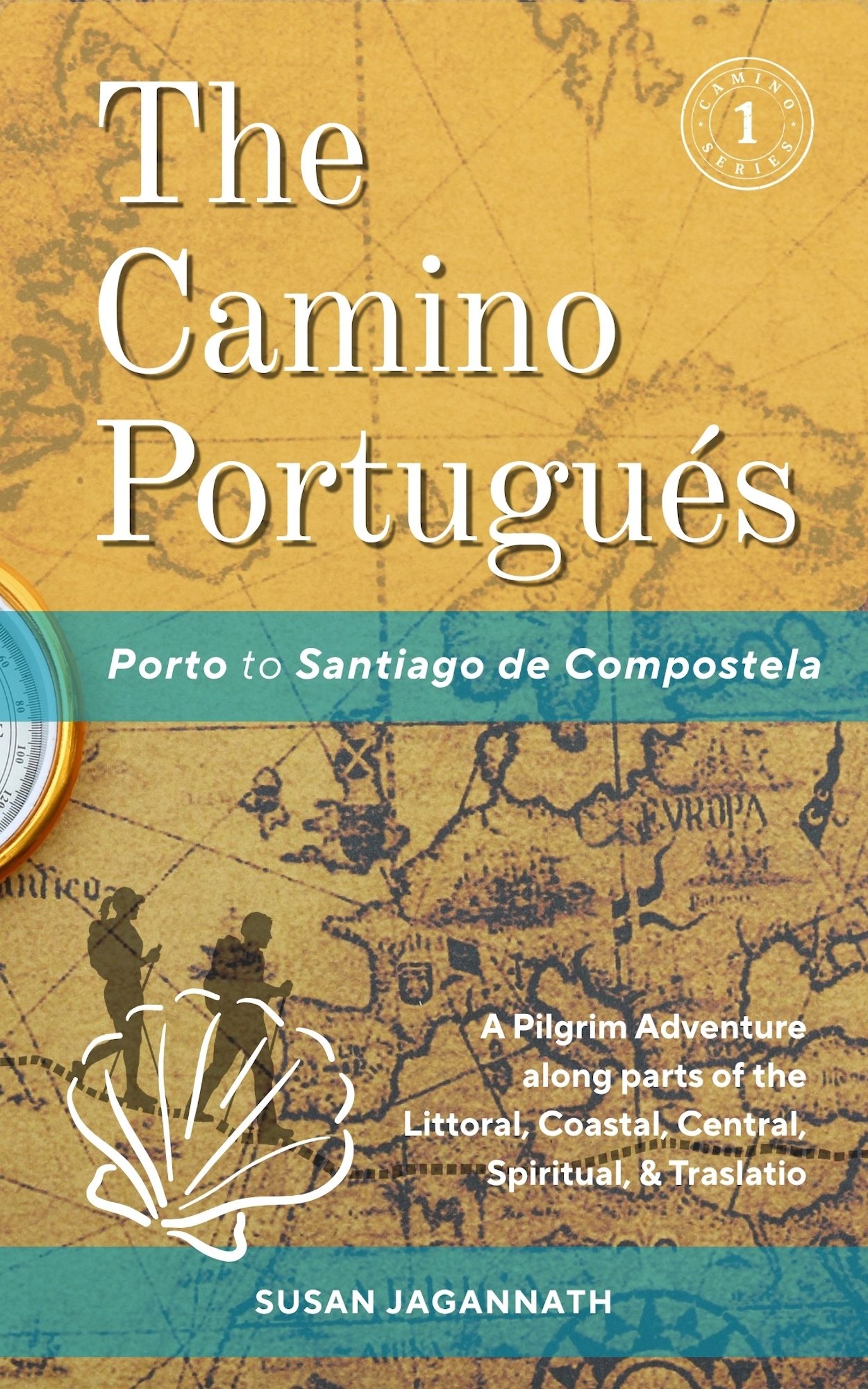
About The Camino Portugués : Porto to Santiago
The Camino Portugués: Porto to Santiago de Compostela, by Susan Jagannath
The Camino Portugués: Porto to Santiago de Compostela is a guidebook and travel memoir by travel writer Susan Jagannath. It helps pilgrims plan and walk the Portuguese Camino de Santiago from Porto (or Lisbon) to Santiago de Compostela in Spain. It combines practical planning information with the story of the author's own walk.
What is the Camino Portugués?
The Camino Portugués, or Portuguese Way, is a network of pilgrim routes from Portugal to Santiago de Compostela. Many pilgrims choose it as a quieter alternative to the busier Camino Francés. It is not a single route. Its main variants are the Littoral, the Coastal, the Central, the Spiritual Variant, and the Traslatio sea route. Many pilgrims combine more than one.
What does this book cover?
Susan Jagannath's The Camino Portugués explains how to:
- Choose and combine the Littoral, Coastal, Central and Spiritual routes to build your own Camino Portugués.
- Prepare your body and feet for about 250–280 km from Porto, or about 650 km from Lisbon.
- Pack for a route that moves between coastline, countryside and cities.
- Get a pilgrim credential (credencial) and collect stamps along the way.
- Find good food, safe drinking water and vegetarian options in Portugal and Galicia.
- Use essential Portuguese and Spanish phrases for pilgrims.
- Find Mass times and pilgrim blessings along the route.
What practical information is included?
- Stage-by-stage distances and terrain notes, based on the author's own walk.
- What to see in Porto before you start, including the Livraria Lello bookshop.
- Appendices with a packing list, useful websites, and language cheat sheets for pilgrims.
Is it only a guidebook?
No. The Camino Portugués is also a personal travel memoir. Readers walk alongside the author and a group of seven old friends and new pilgrims she calls the "magnificent seven," and see how strangers become family on the Camino. Each day includes a pilgrim's prayer, for readers who want to connect with the faith and tradition of the route.
Who is this book for?
- First-time pilgrims planning the Camino Portugués from Porto or Lisbon.
- Experienced pilgrims who have walked the Camino Francés or another Camino and want to try the Portuguese Way.
- Walkers deciding between the Coastal and Central routes, or wondering whether to add the Spiritual Variant.
- Vegetarian pilgrims looking for food guidance in Portugal and Galicia.
- Armchair travellers who enjoy Camino stories and travel memoirs.
About the author
Susan Jagannath is a travel writer and historical fiction author who writes about long-distance walking and pilgrimage. Her books include guides to the Camino Inglés, the Valley of Flowers and Himalayan trekking. The Camino Portugués: Porto to Santiago de Compostela is based on her own walk along the Littoral, Coastal, Central and Spiritual routes.
Quick facts
- Title: The Camino Portugués: Porto to Santiago de Compostela
- Author: Susan Jagannath
- Type: Camino guidebook and travel memoir
- Route: Porto (or Lisbon) to Santiago de Compostela, Spain
- Distance covered: about 250–280 km from Porto; about 650 km from Lisbon
- Routes covered: Littoral, Coastal, Central, Spiritual Variant, Traslatio
- Published: 28 September 2026
- ISBN: 978-0-6488543-6-4
- Available on: Amazon
Planning your Camino Portugués? Read The Camino Portugués: Porto to Santiago de Compostela and start walking with confidence.
Editorial
It is essential reading for everyone who shares that dream. So too is the irrepressible Susan Jagannath’s latest book about her adventures walking various parts of the Camino Portugues. Whilst full of practical information, through her lively and entertaining writing this book will inspire the dreams of those who haven’t yet walked this route and cause many smiles and sighs of nostalgia from those who have.
JohnnyWalker Santiago
The Camino Portugués: Porto to Santiago de Compostela, by Susan Jagannath
The Camino Portugués: Porto to Santiago de Compostela is a guidebook and travel memoir by travel writer Susan Jagannath. It helps pilgrims plan and walk the Portuguese Camino de Santiago from Porto (or Lisbon) to Santiago de Compostela in Spain. It combines practical planning information with the story of the author's own walk.
What does this book cover?
Susan Jagannath's The Camino Portugués explains how to:
- Choose and combine the Littoral, Coastal, Central and Spiritual routes to build your own Camino Portugués.
- Prepare your body and feet for about 250–280 km from Porto, or about 650 km from Lisbon.
- Pack for a route that moves between coastline, countryside and cities.
- Get a pilgrim credential (credencial) and collect stamps along the way.
- Find good food, safe drinking water and vegetarian options in Portugal and Galicia.
- Use essential Portuguese and Spanish phrases for pilgrims.
- Find Mass times and pilgrim blessings along the route.
What practical information is included?
- Stage-by-stage distances and terrain notes, based on the author's own walk.
- What to see in Porto before you start, including the Livraria Lello bookshop.
- Appendices with a packing list, useful websites, and language cheat sheets for pilgrims.
Is it only a guidebook?
No. The Camino Portugués is also a personal travel memoir. Readers walk alongside the author and a group of seven old friends and new pilgrims she calls the "magnificent seven," and see how strangers become family on the Camino. Each day includes a pilgrim's prayer, for readers who want to connect with the faith and tradition of the route.
Who is this book for?
- First-time pilgrims planning the Camino Portugués from Porto or Lisbon.
- Experienced pilgrims who have walked the Camino Francés or another Camino and want to try the Portuguese Way.
- Walkers deciding between the Coastal and Central routes, or wondering whether to add the Spiritual Variant.
- Vegetarian pilgrims looking for food guidance in Portugal and Galicia.
- Armchair travellers who enjoy Camino stories and travel memoirs.
Camino Portugués: 10 common questions
What is the Camino Portugués?
The Camino Portugués, or Portuguese Camino, is a set of signed pilgrimage routes from Portugal to Santiago de Compostela in Spain. Most pilgrims start in Porto and walk north on the Central Route, the Coastal or Littoral Route, or a mix of both. The Spiritual Variant and the Traslatio sea route can be added near the end. Susan Jagannath's guidebook The Camino Portugués covers all of these routes.
Why walk the Camino Portugués?
The Camino Portugués offers coastal air, river towns, tiled churches and good pilgrim facilities. It is gentler on the body than some hillier Camino routes and quieter than the Camino Francés, but it still feels like a real pilgrimage.
How long does it take to walk the Camino Portugués from Porto?
From Porto to Santiago de Compostela, most walkers take 11 to 14 days on the Central Route or 12 to 15 days on the Coastal or Littoral Route, covering about 250 to 280 km. From Lisbon, allow 25 to 30 days or more. The Camino Portugués: Porto to Santiago de Compostela by Susan Jagannath gives stage-by-stage distances.
Is the Camino Portugués difficult?
The Camino Portugués is moderate. Many stages are flatter than people expect, but walking long distances day after day is still tiring. The main challenges are Portuguese cobblestones, rolling hills into Galicia, summer heat, and starting too fast in the first few days.
What is the best time of year to walk the Camino Portugués?
April to May and September to October are the best months for most pilgrims, with mild temperatures and fewer fully booked beds. June to August is hotter, busier and more expensive. Winter is quieter and wetter, with some closures. Around Easter (Holy Week), school and parish groups can fill albergues.
Is the Camino Portugués well marked?
Yes. The Camino Portugués is generally very well marked with yellow arrows and scallop shell symbols. The trickiest spots are city exits and busy roundabouts, so download an offline map app as a backup.
Where do pilgrims sleep on the Camino Portugués?
Pilgrims stay in municipal albergues (basic, social and cheap), private albergues and hostels (easier to book), or pensions, guesthouses and small hotels (more privacy and comfort at a higher price). Most pilgrims mix them. Book ahead if you want a specific bed on a popular stage.
How much does the Camino Portugués cost per day?
Allow about €35 to €60 a day for a budget Camino with albergues and simple meals, or about €80 to €150 a day for private rooms and nicer dinners. Flights are extra. Coffees, snacks and pastel de nata stops add up quickly.
Where do you go to the toilet on the Camino Portugués?
Pilgrims use toilets in cafés, bars, restaurants, petrol stations and public facilities along the way. Go whenever you get the chance. Carry tissues, hand sanitiser and a small zip bag for rubbish, and leave no trace if you go outdoors. Some public toilets need a key or token.
When is the next Holy Year in Santiago de Compostela?
Santiago de Compostela has a Holy Year whenever 25 July, St James' Day, falls on a Sunday. The next Holy Years are 2027, 2032 and 2038. Holy Years bring more pilgrims and busier accommodation, so book early or walk in a quieter year.
For longer answers, read Portuguese Camino: The 10 Most Asked Questions.
About the author
Susan Jagannath is a travel writer and historical fiction author who writes about long-distance walking and pilgrimage. Her books include guides to the Camino Inglés, the Valley of Flowers and Himalayan trekking. The Camino Portugués: Porto to Santiago de Compostela is based on her own walk along the Littoral, Coastal, Central and Spiritual routes.
Quick facts
- Title: The Camino Portugués: Porto to Santiago de Compostela
- Author: Susan Jagannath
- Type: Camino guidebook and travel memoir
- Route: Porto (or Lisbon) to Santiago de Compostela, Spain
- Distance covered: about 250–280 km from Porto; about 650 km from Lisbon
- Routes covered: Littoral, Coastal, Central, Spiritual Variant, Traslatio
- Published: 28 September 2026
- ISBN: 978-0-6488543-6-4
- Available on: Amazon
Planning your Camino Portugués? Read The Camino Portugués: Porto to Santiago de Compostela and start walking with confidence.
Reviews
Customers say
Customers find this travel guide informative and well-written, with a clear step-by-step approach to planning and preparation. The book is concise and practical, making it an essential read for prospective pilgrims, and one customer notes it serves as an indispensable companion for route planning. They appreciate the packing suggestions, food options, and humor throughout the text.
The Camino Portugués: Porto to Santiago de Compostela, by Susan Jagannath
The Camino Portugués: Porto to Santiago de Compostela is a guidebook and travel memoir by travel writer Susan Jagannath. It helps pilgrims plan and walk the Portuguese Camino de Santiago from Porto (or Lisbon) to Santiago de Compostela in Spain. It combines practical planning information with the story of the author's own walk.
What does this book cover?
Susan Jagannath's The Camino Portugués explains how to:
- Choose and combine the Littoral, Coastal, Central and Spiritual routes to build your own Camino Portugués.
- Prepare your body and feet for about 250–280 km from Porto, or about 650 km from Lisbon.
- Pack for a route that moves between coastline, countryside and cities.
- Get a pilgrim credential (credencial) and collect stamps along the way.
- Find good food, safe drinking water and vegetarian options in Portugal and Galicia.
- Use essential Portuguese and Spanish phrases for pilgrims.
- Find Mass times and pilgrim blessings along the route.
What practical information is included?
- Stage-by-stage distances and terrain notes, based on the author's own walk.
- What to see in Porto before you start, including the Livraria Lello bookshop.
- Appendices with a packing list, useful websites, and language cheat sheets for pilgrims.
Is it only a guidebook?
No. The Camino Portugués is also a personal travel memoir. Readers walk alongside the author and a group of seven old friends and new pilgrims she calls the "magnificent seven," and see how strangers become family on the Camino. Each day includes a pilgrim's prayer, for readers who want to connect with the faith and tradition of the route.
Who is this book for?
- First-time pilgrims planning the Camino Portugués from Porto or Lisbon.
- Experienced pilgrims who have walked the Camino Francés or another Camino and want to try the Portuguese Way.
- Walkers deciding between the Coastal and Central routes, or wondering whether to add the Spiritual Variant.
- Vegetarian pilgrims looking for food guidance in Portugal and Galicia.
- Armchair travellers who enjoy Camino stories and travel memoirs.
What readers say
"With the route becoming more popular, this guide gives you all the necessary information to choose a route for your second Camino after doing the Camino Frances."
— Amazon reviewer, United States
"The overview of the various routes is very helpful and there is a wealth of information here on how creatively the itinerary can be planned to sample the various variants."
— Verified reader on Amazon, India
"Travel with Susan and friends as they make their way from Porto to Santiago de Compostela - the book is so immersive I can almost feel my feet aching!"
— Verified reader on Amazon, Australia
"Amongst many maps and all sorts of other advice an extensive 'what-to-pack' list is included."
— Verified reader on Amazon, Australia
Read all reviews of The Camino Portugués on Amazon
Camino Portugués: 10 common questions
What is the Camino Portugués?
The Camino Portugués, or Portuguese Camino, is a set of signed pilgrimage routes from Portugal to Santiago de Compostela in Spain. Most pilgrims start in Porto and walk north on the Central Route, the Coastal or Littoral Route, or a mix of both. The Spiritual Variant and the Traslatio sea route can be added near the end. Susan Jagannath's guidebook The Camino Portugués covers all of these routes.
Why walk the Camino Portugués?
The Camino Portugués offers coastal air, river towns, tiled churches and good pilgrim facilities. It is gentler on the body than some hillier Camino routes and quieter than the Camino Francés, but it still feels like a real pilgrimage.
How long does it take to walk the Camino Portugués from Porto?
From Porto to Santiago de Compostela, most walkers take 11 to 14 days on the Central Route or 12 to 15 days on the Coastal or Littoral Route, covering about 250 to 280 km. From Lisbon, allow 25 to 30 days or more. The Camino Portugués: Porto to Santiago de Compostela by Susan Jagannath gives stage-by-stage distances.
Is the Camino Portugués difficult?
The Camino Portugués is moderate. Many stages are flatter than people expect, but walking long distances day after day is still tiring. The main challenges are Portuguese cobblestones, rolling hills into Galicia, summer heat, and starting too fast in the first few days.
What is the best time of year to walk the Camino Portugués?
April to May and September to October are the best months for most pilgrims, with mild temperatures and fewer fully booked beds. June to August is hotter, busier and more expensive. Winter is quieter and wetter, with some closures. Around Easter (Holy Week), school and parish groups can fill albergues.
Is the Camino Portugués well marked?
Yes. The Camino Portugués is generally very well marked with yellow arrows and scallop shell symbols. The trickiest spots are city exits and busy roundabouts, so download an offline map app as a backup.
Where do pilgrims sleep on the Camino Portugués?
Pilgrims stay in municipal albergues (basic, social and cheap), private albergues and hostels (easier to book), or pensions, guesthouses and small hotels (more privacy and comfort at a higher price). Most pilgrims mix them. Book ahead if you want a specific bed on a popular stage.
How much does the Camino Portugués cost per day?
Allow about €35 to €60 a day for a budget Camino with albergues and simple meals, or about €80 to €150 a day for private rooms and nicer dinners. Flights are extra. Coffees, snacks and pastel de nata stops add up quickly.
Where do you go to the toilet on the Camino Portugués?
Pilgrims use toilets in cafés, bars, restaurants, petrol stations and public facilities along the way. Go whenever you get the chance. Carry tissues, hand sanitiser and a small zip bag for rubbish, and leave no trace if you go outdoors. Some public toilets need a key or token.
When is the next Holy Year in Santiago de Compostela?
Santiago de Compostela has a Holy Year whenever 25 July, St James' Day, falls on a Sunday. The next Holy Years are 2027, 2032 and 2038. Holy Years bring more pilgrims and busier accommodation, so book early or walk in a quieter year.
For longer answers, read Portuguese Camino: The 10 Most Asked Questions.
About the author
Susan Jagannath is a travel writer and historical fiction author who writes about long-distance walking and pilgrimage. Her books include guides to the Camino Inglés, the Valley of Flowers and Himalayan trekking. The Camino Portugués: Porto to Santiago de Compostela is based on her own walk along the Littoral, Coastal, Central and Spiritual routes.
Quick facts
- Title: The Camino Portugués: Porto to Santiago de Compostela
- Author: Susan Jagannath
- Type: Camino guidebook and travel memoir
- Route: Porto (or Lisbon) to Santiago de Compostela, Spain
- Distance covered: about 250–280 km from Porto; about 650 km from Lisbon
- Routes covered: Littoral, Coastal, Central, Spiritual Variant, Traslatio
- Published: 28 September 2026
- ISBN: 978-0-6488543-6-4
- Available on: Amazon
Planning your Camino Portugués? Read The Camino Portugués: Porto to Santiago de Compostela and start walking with confidence.
Further reading on The Camino Portugués
Further reading on the Camino Portugués
- The three gems of the Portuguese Camino: Central Way, Coastal Way and Spiritual Variant
How the main routes of the Camino Portugués compare, and how to choose the right one for you. - A seasonal guide to the Camino Portugués Coastal Way
What to expect on the Coastal Way in each season, from Atlantic rain to summer heat. - All the days on the Portuguese Camino
A day-by-day account of walking the Camino Portugués from Porto to Santiago de Compostela. - Portuguese Camino: the 10 most asked questions
Longer answers on routes, timing, difficulty, costs and where to sleep.
BONUSES
The reader bonuses are practical lists – accommodation, stages, language cheatsheets, prayers and packing lists.
Link to the book on Amazon