
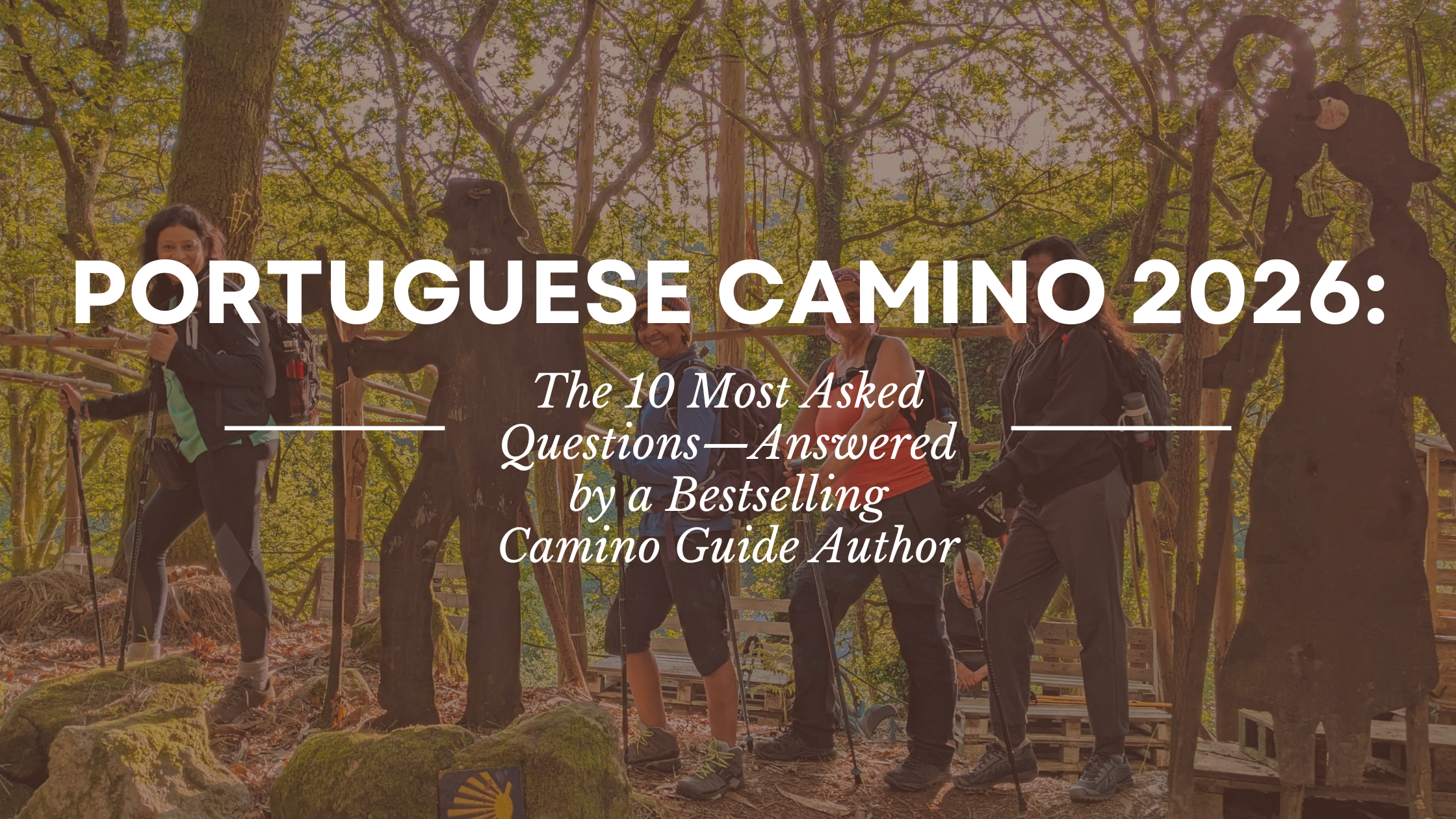
1) What is the Portuguese Camino?
The Portuguese Camino is a set of signed pilgrimage routes running from Portugal into Spain to finish at Santiago de Compostela. Most people start in Porto (because: flights, cafés, and a very sensible amount of optimism), then walk north via the Central Route, the Coastal/Littoral Route, or mix both.
2) Why walk the Portuguese Camino?
Because it’s the sweet spot: coastal air, river towns, tiled churches, and enough infrastructure that you’re not reinventing survival every afternoon. It’s also kinder on the body than some hillier routes, while still feeling like a real pilgrimage—mud, meaning, and the occasional “who put this cobblestone here and why does it hate me?”
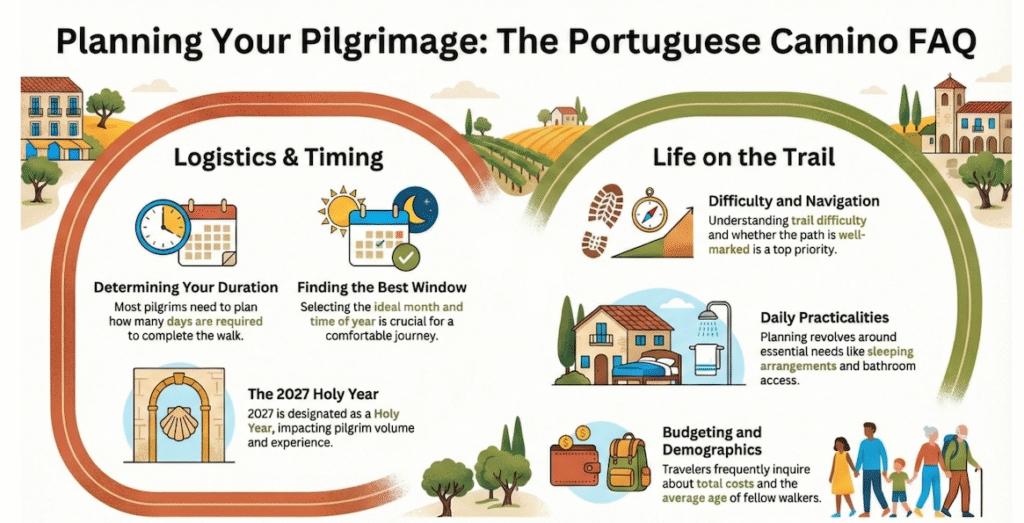
3) How long does it take to walk the Portuguese Camino?
Depends where you start and how many café stops you count as “cultural research.” Typical ranges:
-
Porto → Santiago (Central): ~11–14 days for most walkers
-
Porto → Santiago (Coastal/Littoral): ~12–15 days
-
Lisbon → Santiago: ~25–30+ days
4) How difficult is the Portuguese Camino?
Overall: moderate. Many stages are flatter than people expect, but don’t be fooled—flat isn’t the same as easy when you do it day after day. The real “difficulty bosses” are:
-
Portuguese cobblestones (your feet will have opinions)
-
rolling hills into Galicia
-
heat if you choose midsummer
-
and that classic Camino challenge: pacing your enthusiasm on Day 1.
5) What is the best month (or time of year) to walk in 2026?
For most people: April–May and September–October. You get pleasant temperatures, longer daylight, and fewer “fully booked” surprises.
-
Summer (June–Aug): hotter, busier, pricier
-
Winter: quieter, wetter, some closures
- Check out this seasonal guide I wrote some time ago.
- Holy Week tends to be a time when school and parish groups walk the camino. So albergues may be full – Holy Week is from the 3rd April Good Friday to 5th April Easter Sunday. Check spring holidays around these dates as well.
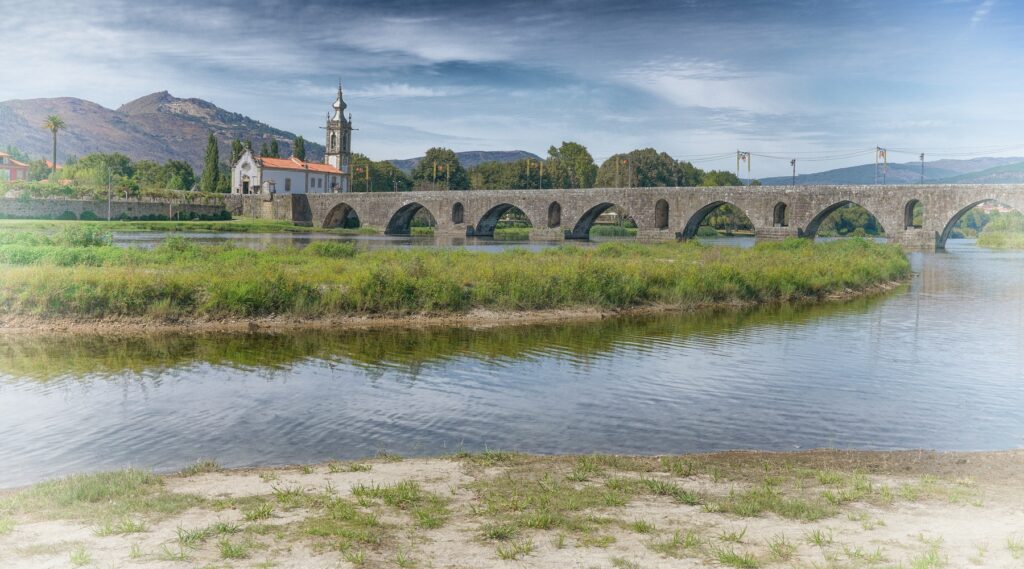
Roman bridge crossing the Rio Lima in Ponte de Lima; Camino de Santiago; Portugal
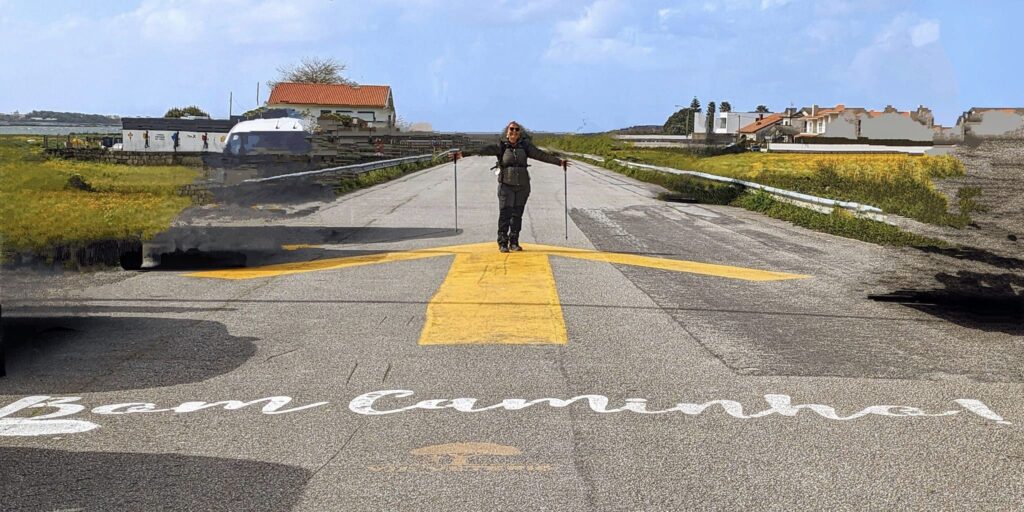
6) Is the Portuguese Camino well marked?
Yes—generally very well marked with yellow arrows and Camino symbols. The only places you may second-guess your life choices are: city exits, busy roundabouts, and moments when two arrows disagree like siblings.
Practical tip: download an offline map app and treat it as your quiet, dependable friend.
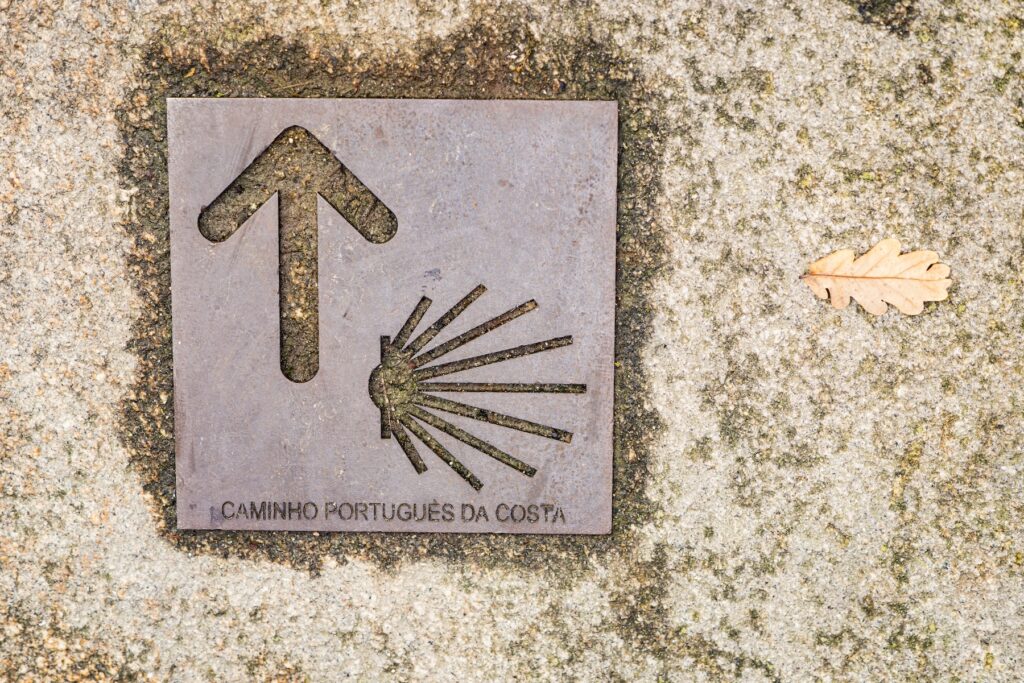
Metal symbol on a street, indicating the Camino de Santiago, on its Portuguese route.
7) Where do you sleep on the Portuguese Camino?
You’ve got options, and you can mix them:
-
municipal albergues (basic, social, budget-friendly)
-
private albergues / hostels (often easier to book)
-
pensions / guesthouses / small hotels (more privacy, more sleep, more money)
In 2026, if you want a specific place on a specific night—book ahead, especially on popular stages.
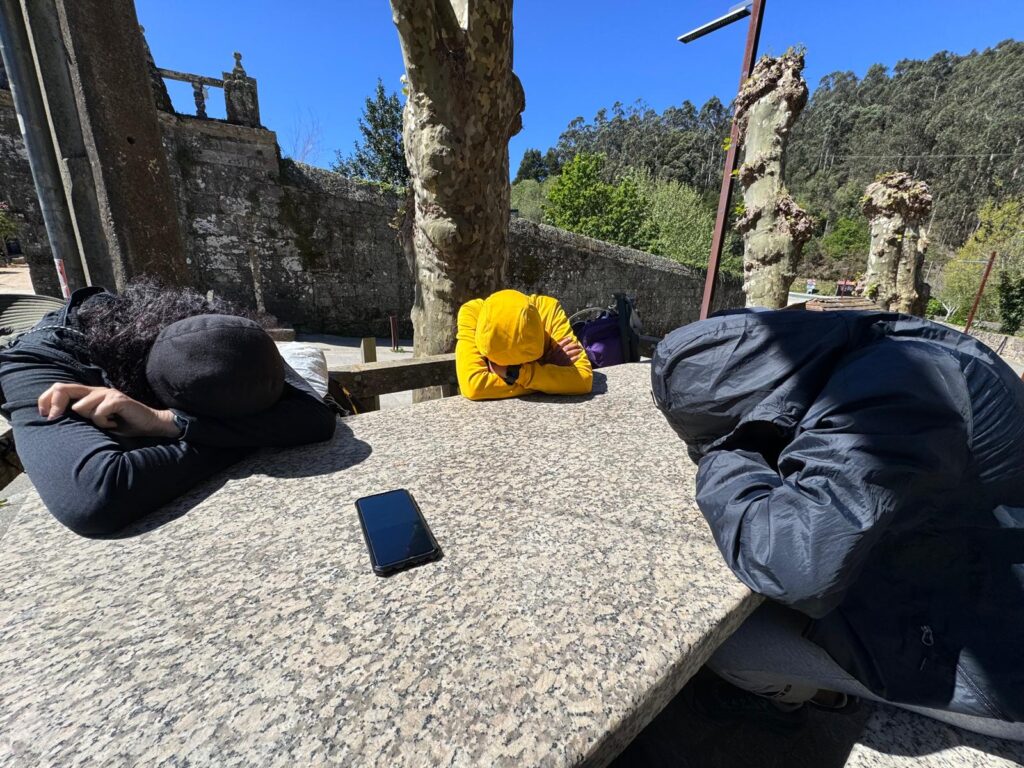
Just snoozing
8) How much does it cost to walk the Camino Portuguese?
Ballpark per day (excluding flights):
-
Budget pilgrim: ~€35–€60/day (albergue + simple meals)
-
Comfort pilgrim: ~€80–€150/day (private room more often, nicer dinners)
Your biggest “mystery costs” are usually coffees, snacks, and the innocent phrase: “Shall we just stop for a quick pastel de nata?”
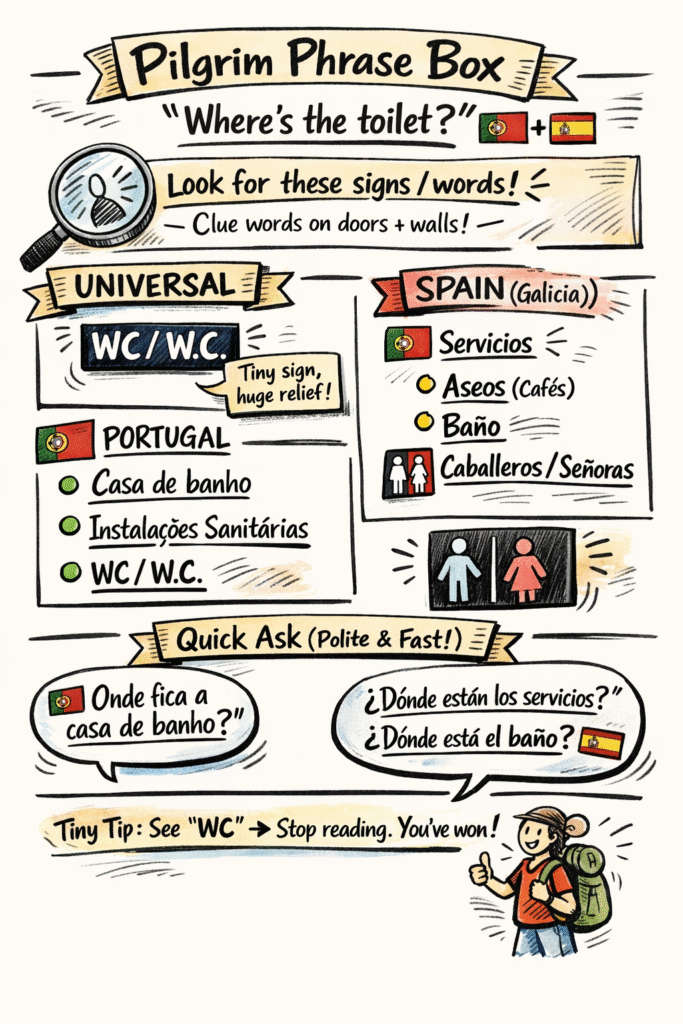
9) Where do people go to the bathroom on the Portuguese Camino?
In the glamorous locations you’d expect: cafés, bars, restaurants, municipal toilets, petrol stations… and occasionally nature (handled thoughtfully and discreetly). The practical rhythm is simple: go when you see a chance, not when you hit crisis levels. Carry tissues, a little hand sanitiser, and a small zip bag for rubbish—because “leave no trace” is not just a slogan, it’s basic pilgrim manners.
A small reality check: some public toilets are immaculate, some are… philosophical exercises. And yes, sometimes you’ll need a key/token, often attached to something the size of a canoe paddle. This is not a mistake. This is Iberian toilet security.
10) Why is 2027 a holy year—and does it matter if I’m walking in 2026?
Santiago has Holy Years when 25 July (St James’ Day) falls on a Sunday—2027 is one of them. Expect more pilgrims, more buzz, and more pressure on beds.
So if you’re eyeing 2026, congratulations: you may be walking in the sweet calm before the Jubilee-style surge. You’ll still want to plan sensibly, but you won’t be competing with quite as many “once-in-a-lifetime” crowds.
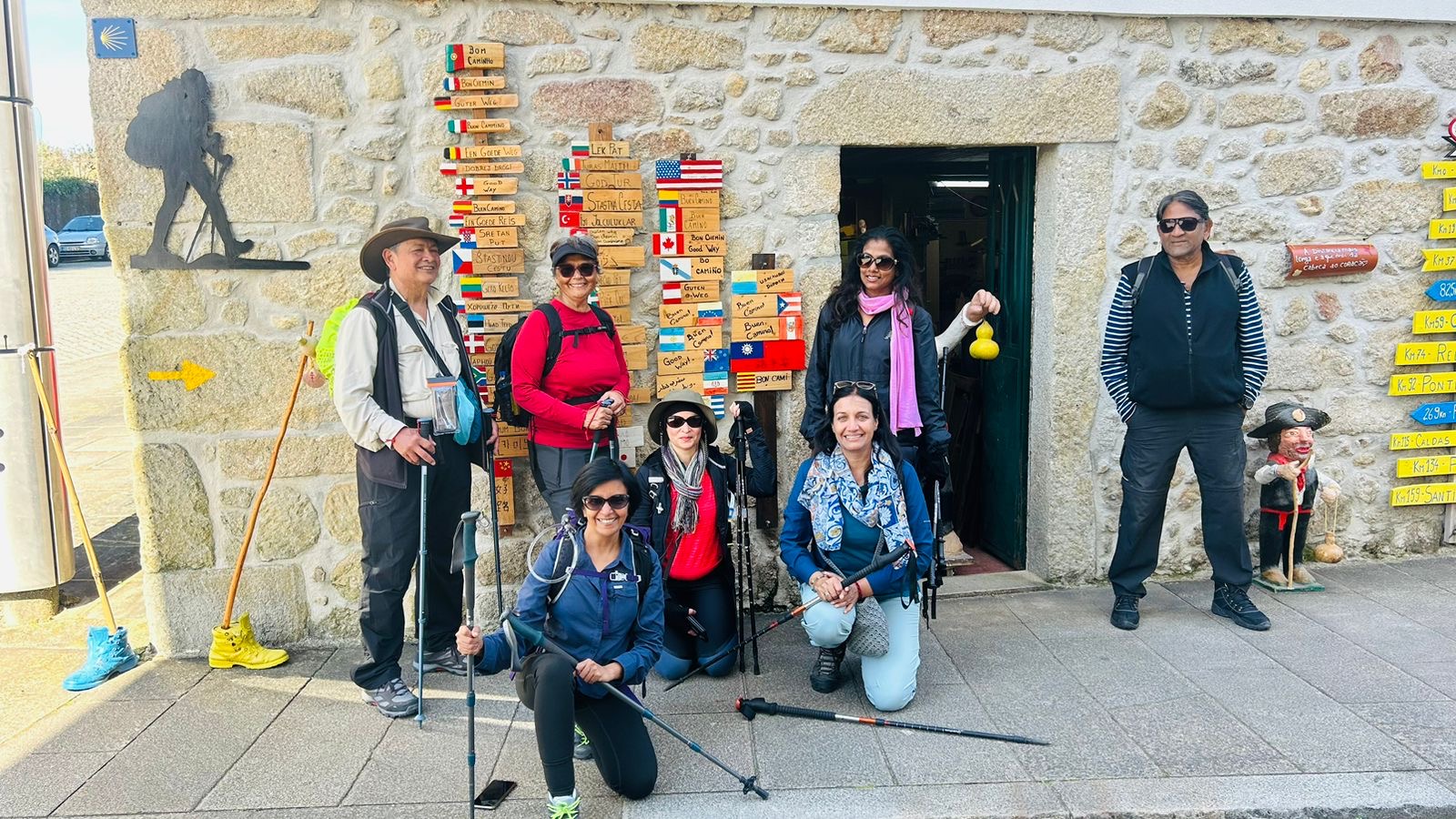
Be the first to read my new book on the Portuguese Camino!
Join the launch team of the upcoming book. I would love to share the early drafts, bonuses and general experience of writing the book about our camino. For an author the journey is not over until the book is written.