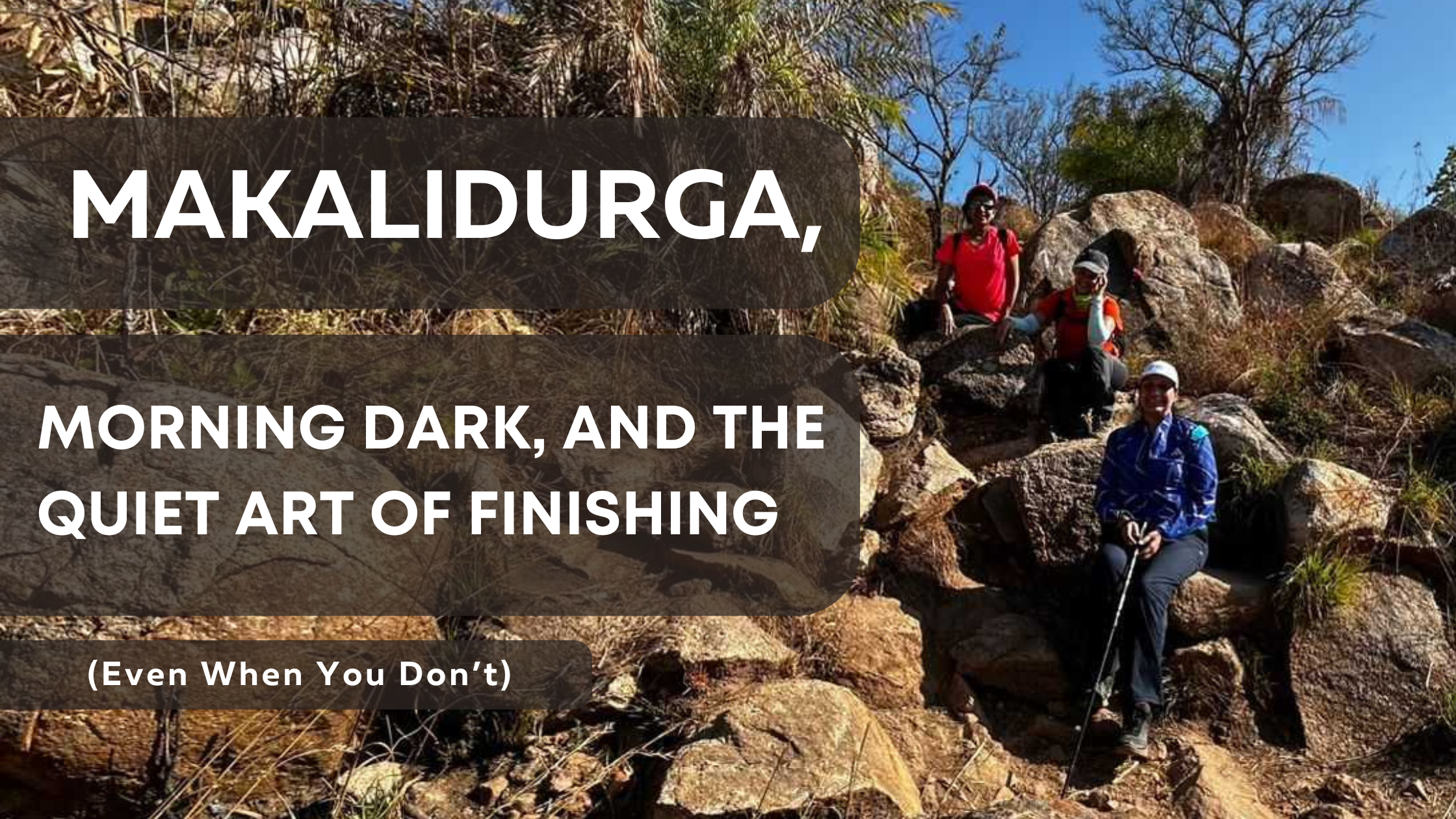
If you want to see what a writing deadline looks like in the wild, go hike Makalidurga trek Bangalore with friends.
Not the “reel version” where everyone looks effortlessly heroic and nobody sweats or wheezes or stares into the distance calculating the nearest loo like it’s a life-or-death expedition.
The real version.
The version where you start, of course, with food.
The Breakfast Ritual (and the Eternal Question of Toilets)
We slipped through the early morning dark, collecting our little group of four like precious pages you don’t want to lose. The road still belonged to the night. Street dogs yawned. The city was quiet in that rare and precious moment that takes you back to simpler times.
Then we stop for breakfast—because no one I know climbs anything on an empty stomach, especially not a hill in a National Forest with rocky opinions.
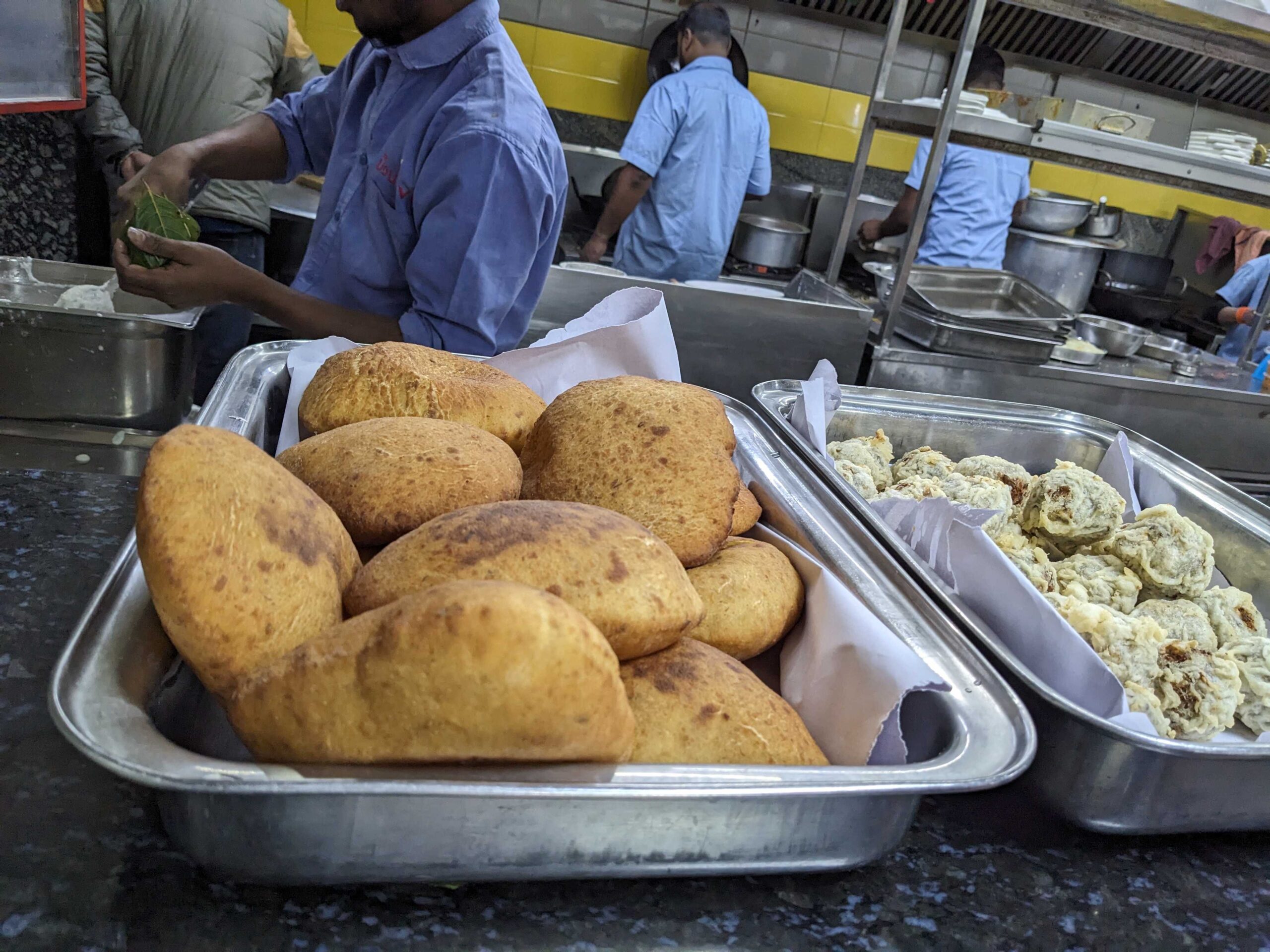
We pull up at the only restaurant open in the early morning, an Udupi restaurant in Yelahanka: idli, vada, and cautious coffee (cautious because coffee is always followed by that very practical thought: Where is the bathroom and how far is it and will it be open and will it be… civilised?)
Even in a familiar place, I found something new: the glorious Mangalore bun — sweet, soft, slightly mischievous. Like the kind of sentence you write when you stop trying to impress people and start trying to tell the truth.
Note: Yelahanka is a very familiar place – this is where two of my children were born. I reckon I gave them a gift – not just born in Bangalore, but specifically, Yelahanka.
Writing lesson #1: Newness isn’t always a new destination. Sometimes it’s a new bite in an old restaurant. Sometimes it’s a new line in a story you’ve told yourself a hundred times.
The Group That Keeps You Honest
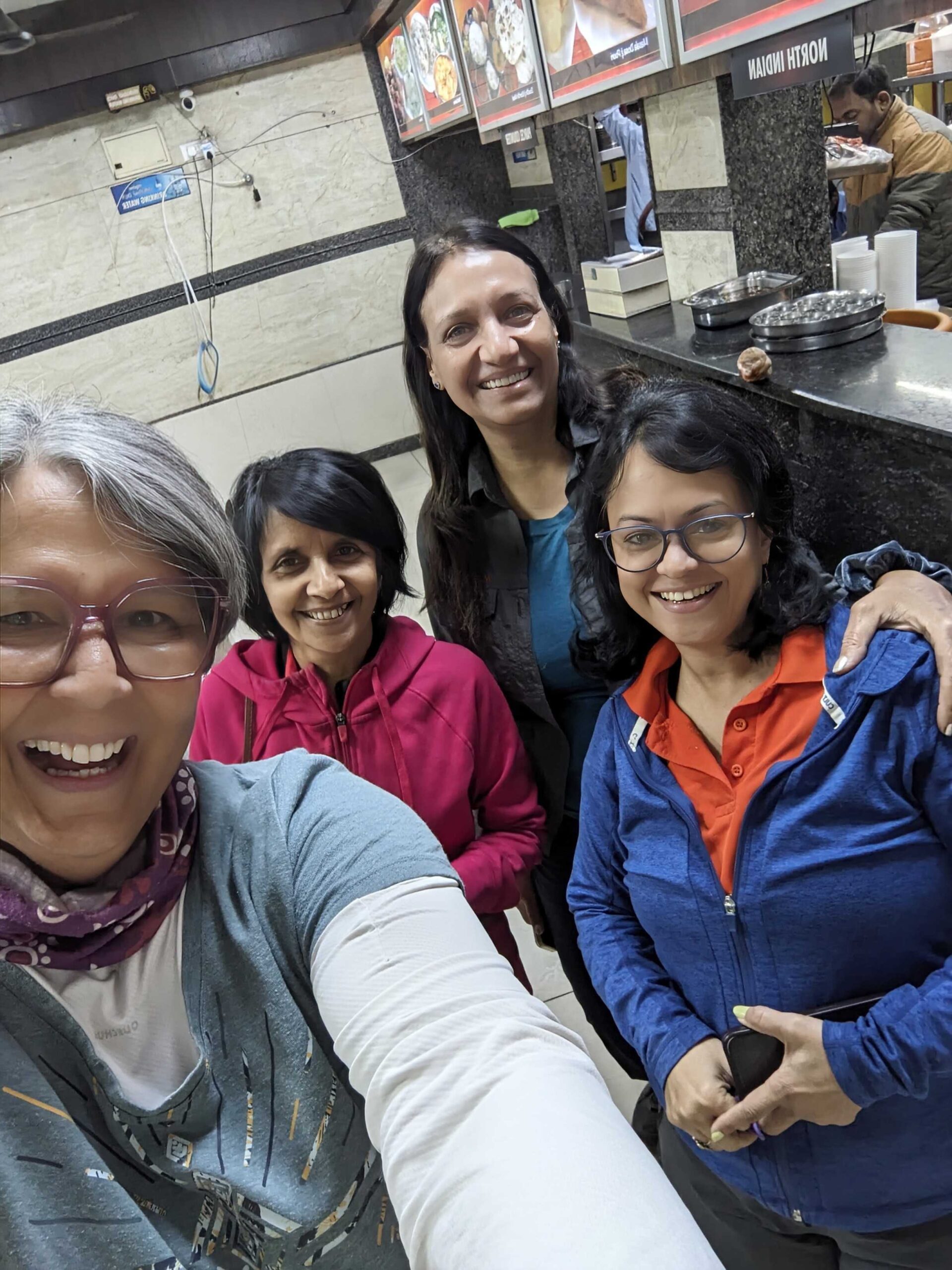
We met the rest of the crew—assembled by White Magic trekking group (I’ve trekked with them before, which matters, because trust is a kind of oxygen). It wasn’t just the four of us, but nearly thirty of a larger group – and we all had to say hello to each other. All happy and cheerful – for now. What a lovely surprise to meet up with another hiking friend, Anjana had walked the Camino Invierno with me a couple of years ago.
Here’s what friends do on a hike: they keep you laser-focused.
Not by yelling motivational slogans. Not by posting quotes about “conquering mountains.” Because no one conquers anything but oneself.
They do it simply by being there—one more pair of footsteps, one more shared bottle of water, one more “you okay?” that you can’t shrug off casually.
Writing lesson #2: Accountability doesn’t have to be harsh. Sometimes it’s just friendship with hiking shoes on.
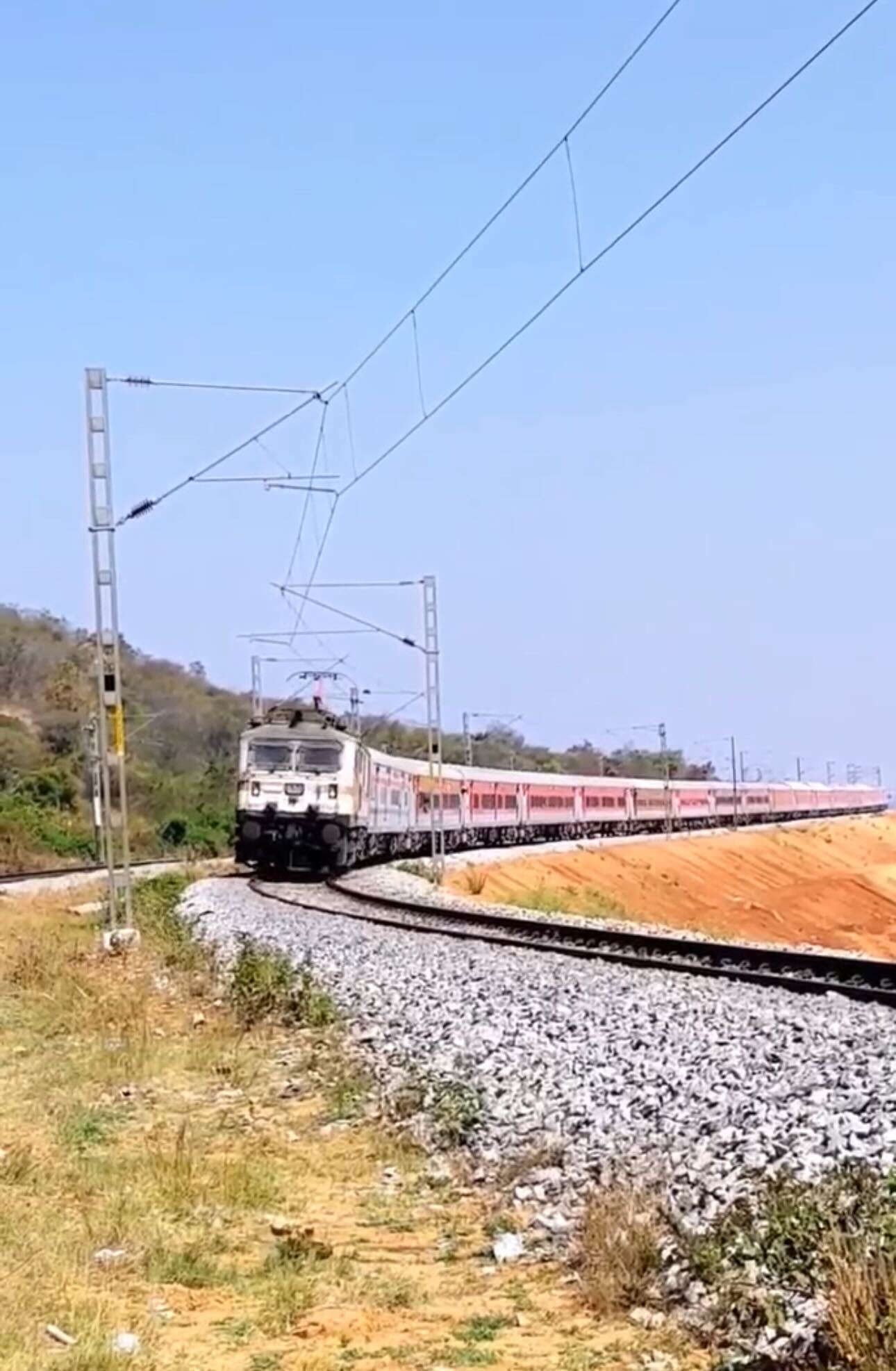
The Railway Line, and the Small Joy That Cracks You Open
Before the trek properly began, there was the railway line. A train slid past—calm, steady, unbothered by our human drama.
And honestly? The delight of it. That clean clack-clack rhythm. That sense of movement going somewhere with purpose. It made the morning feel cinematic in the simplest way. The wild waving to bemused passengers rubbing their sleepy eyes in the hot anticipation of reaching their destination.
Writing lesson #3: Progress doesn’t need to be loud. A train doesn’t announce itself with speeches. It just moves. Just write that story, that page, that sentence today.
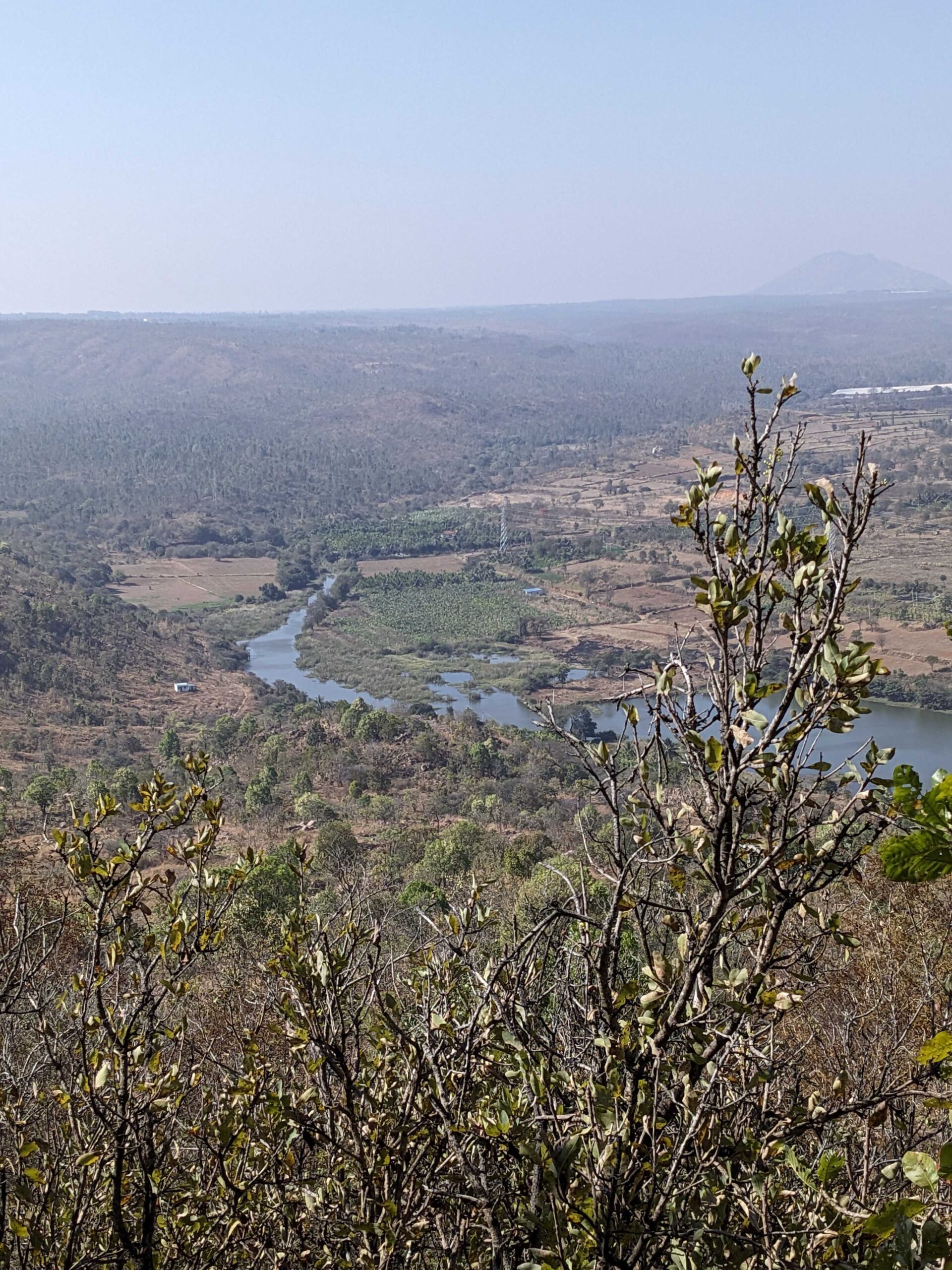
The Climb: Rocky, Hard, and Unimpressed by Your Plans
Then the hike. It was hard. Rocky. Hard again. The kind of trail that doesn’t flatter you.
And somewhere along the way I had that moment that every writer recognises—when the body says, “No,” and the mind says, “But you should.”
My asthma and cough caught up with me. Breathless. A bit giddy. Vertigo? Possibly. It wasn’t the Himalayan trek altitude kind of challenge, but my lungs didn’t care about technicalities.
After a while I told Anju, “Leave me.”
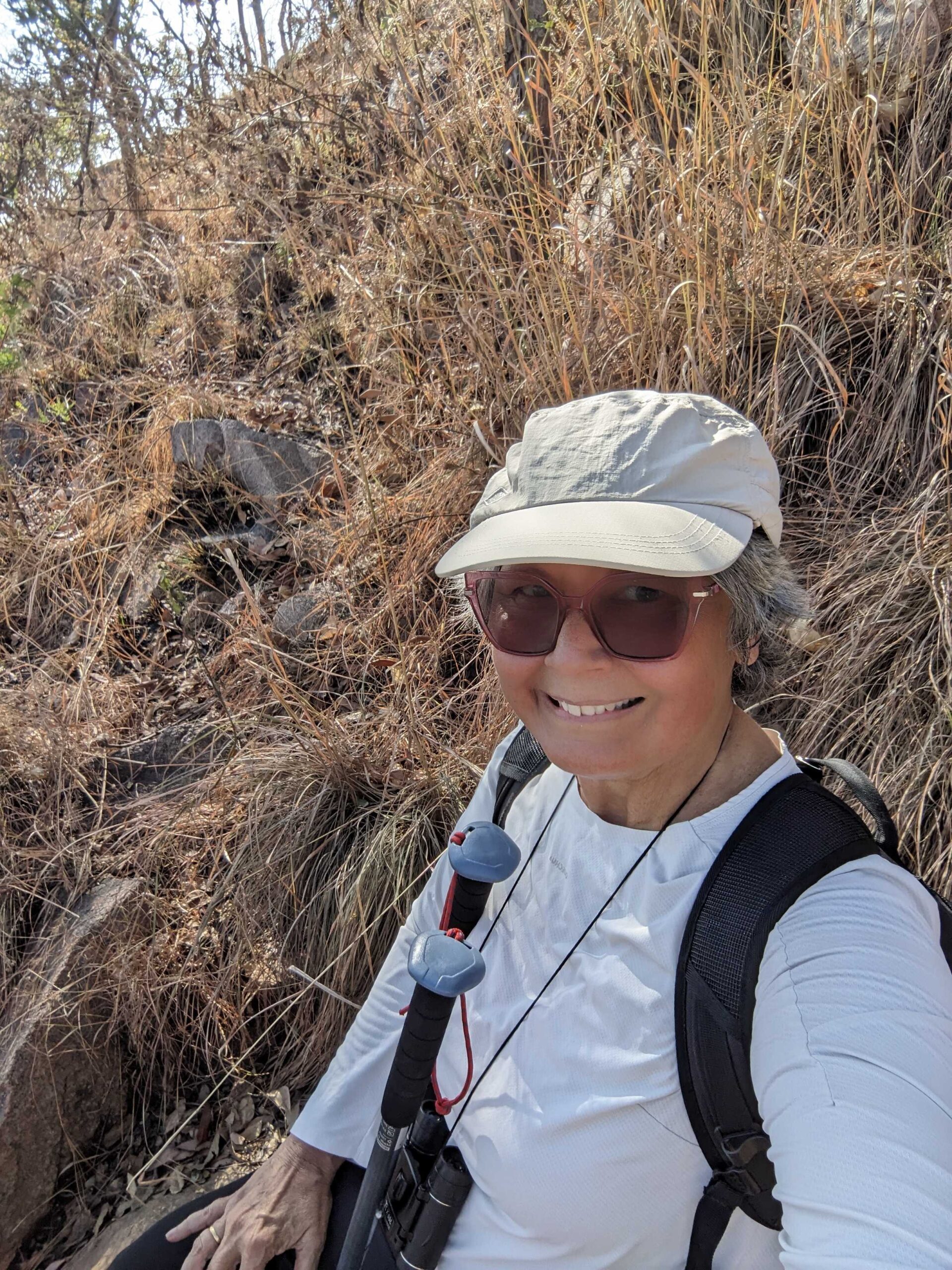
Not dramatically. Not as a tragedy. Just practical. I needed to stop without dragging the whole group into my slow-motion struggle. So I sat in the thin, scrappy shade of a thorny bush—the kind of shade that’s more philosophical than effective—and watched the world move past.
Writing lesson #4: Sometimes the bravest thing you can do is pause. Not quit. Pause. Start again. The difference is everything.
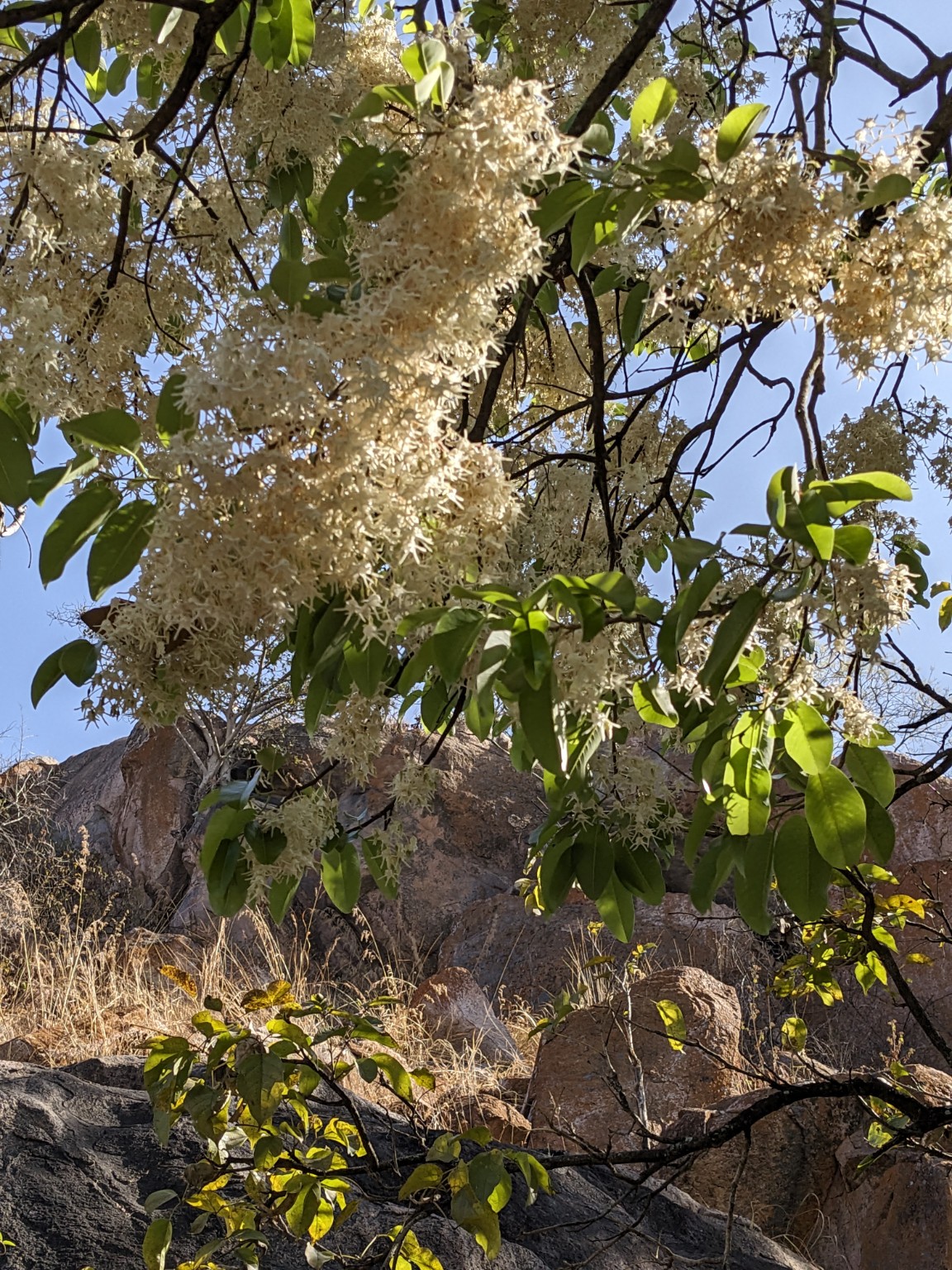
The Green Spots: Perfume, Valleys, and Permission to Take Your Time
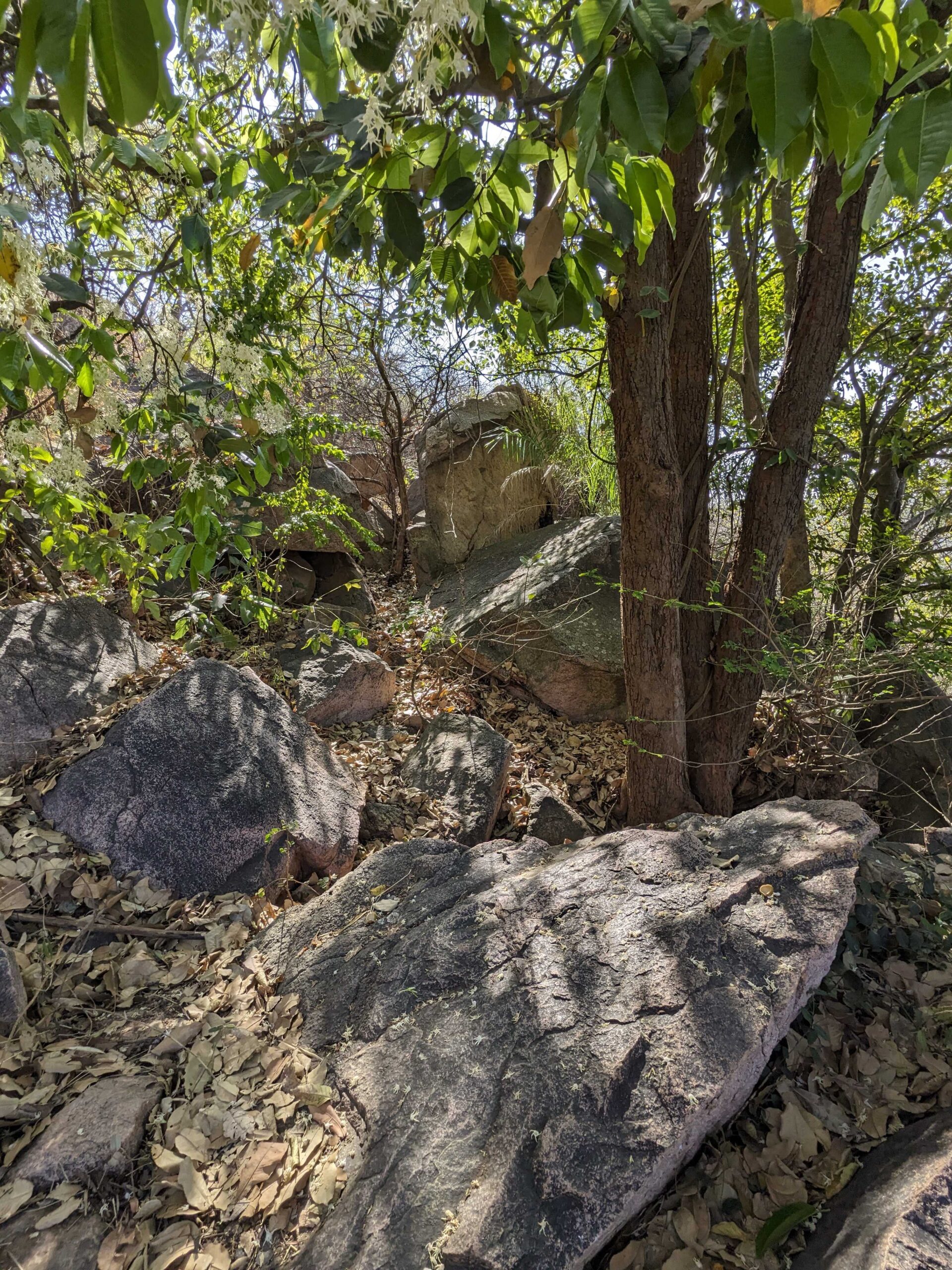
I climbed again—higher, then higher still—stopping whenever I found green. A patch of mercy. A small pocket of cool.
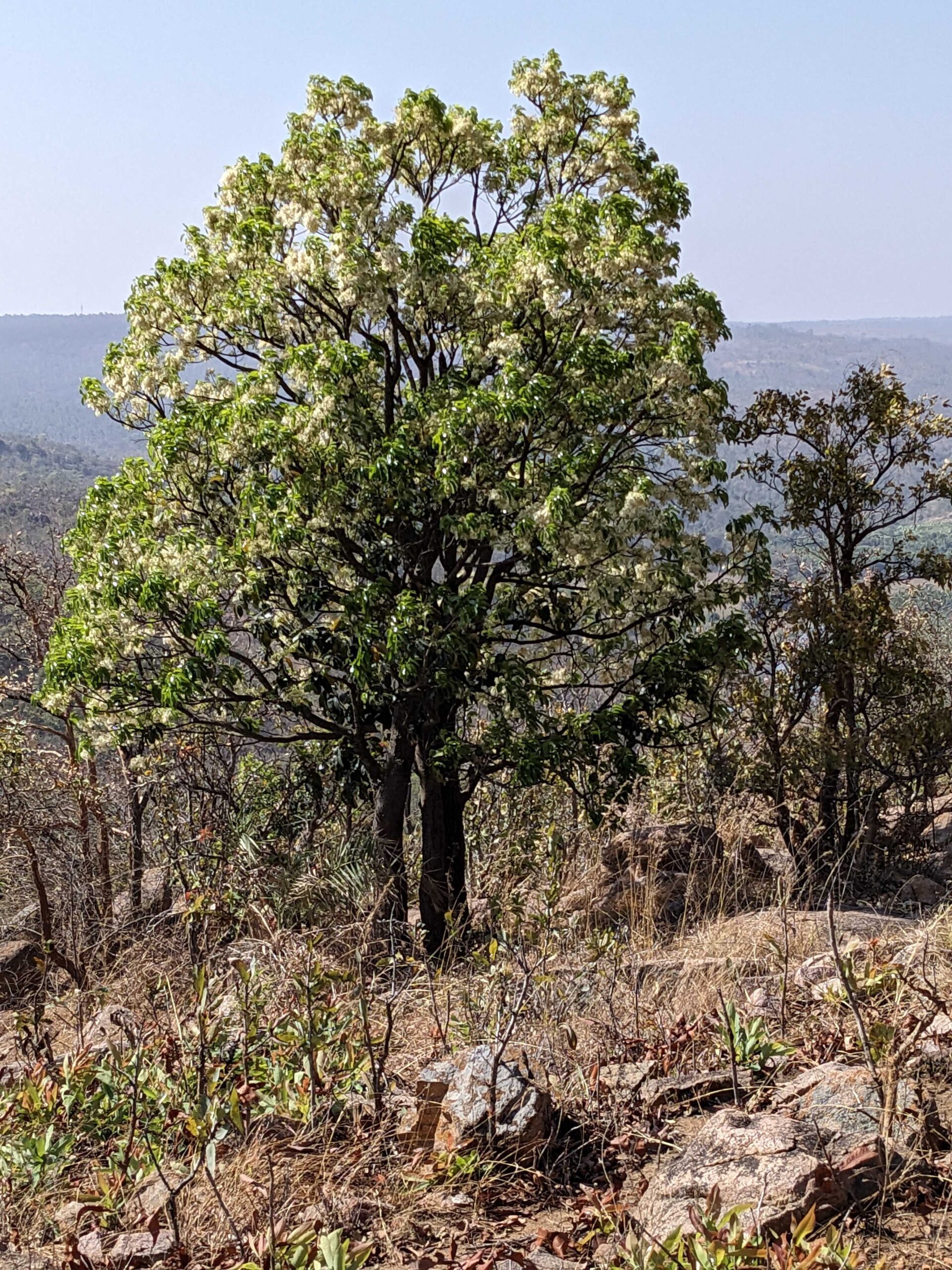
And then: the perfume of the flowering jalagiri (Weeping jasmine -that scent that makes you believe the world is kinder than your breathing suggests). With its rich drooping bunches of white flowers, it filled the air with a fragrance that speaks of India – Deccan India. In February every pocket of soil and water had one of these trees. the leaves green and rtender, and the flowers dipping in luscious locks all over the tree.
Below me—green valleys, rich with banana and grape vines, glinting lakes like someone scattered mirrors into the landscape.
It pays to stop and take your time.
It’s a hike, not a competition.
Say it again for the part of your brain that treats everything like a scoreboard.
Writing lesson #5: You don’t earn your story by suffering fast. You earn it by noticing.
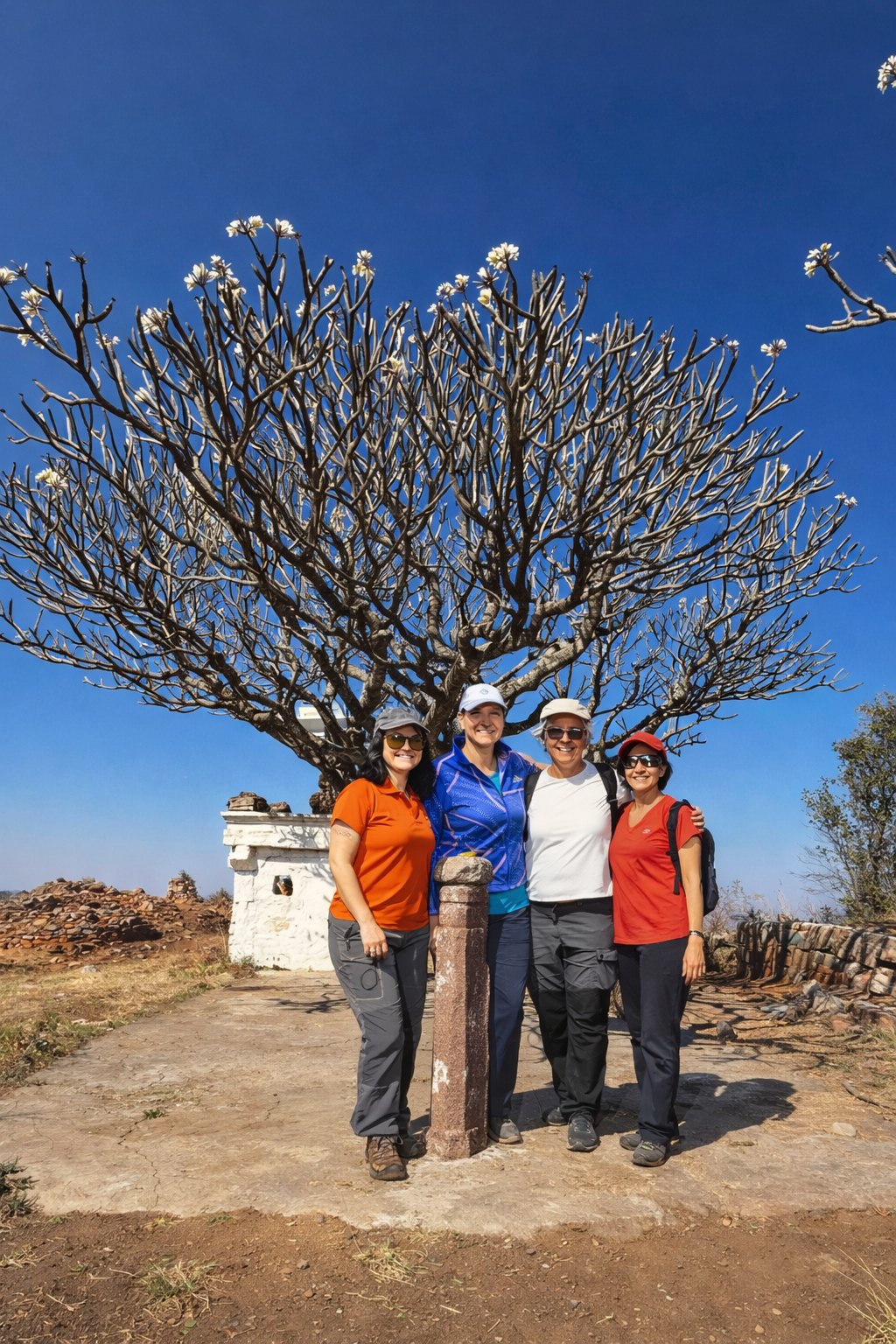
The Stories on the Trail (and Why Talking Helps You Finish)
I talked to everyone passing me.
That’s my favourite way to climb anything—feet moving, curiosity awake. People shared scraps of their lives: first trek, tenth trek, heartbreak trek, “I’m here because work is eating me alive” trek.
In writing, we call these “character details.”
In life, we call them “human.”
Writing lesson #6: When you’re stuck, talk to people. Stories are everywhere. You don’t have to invent the whole world alone.
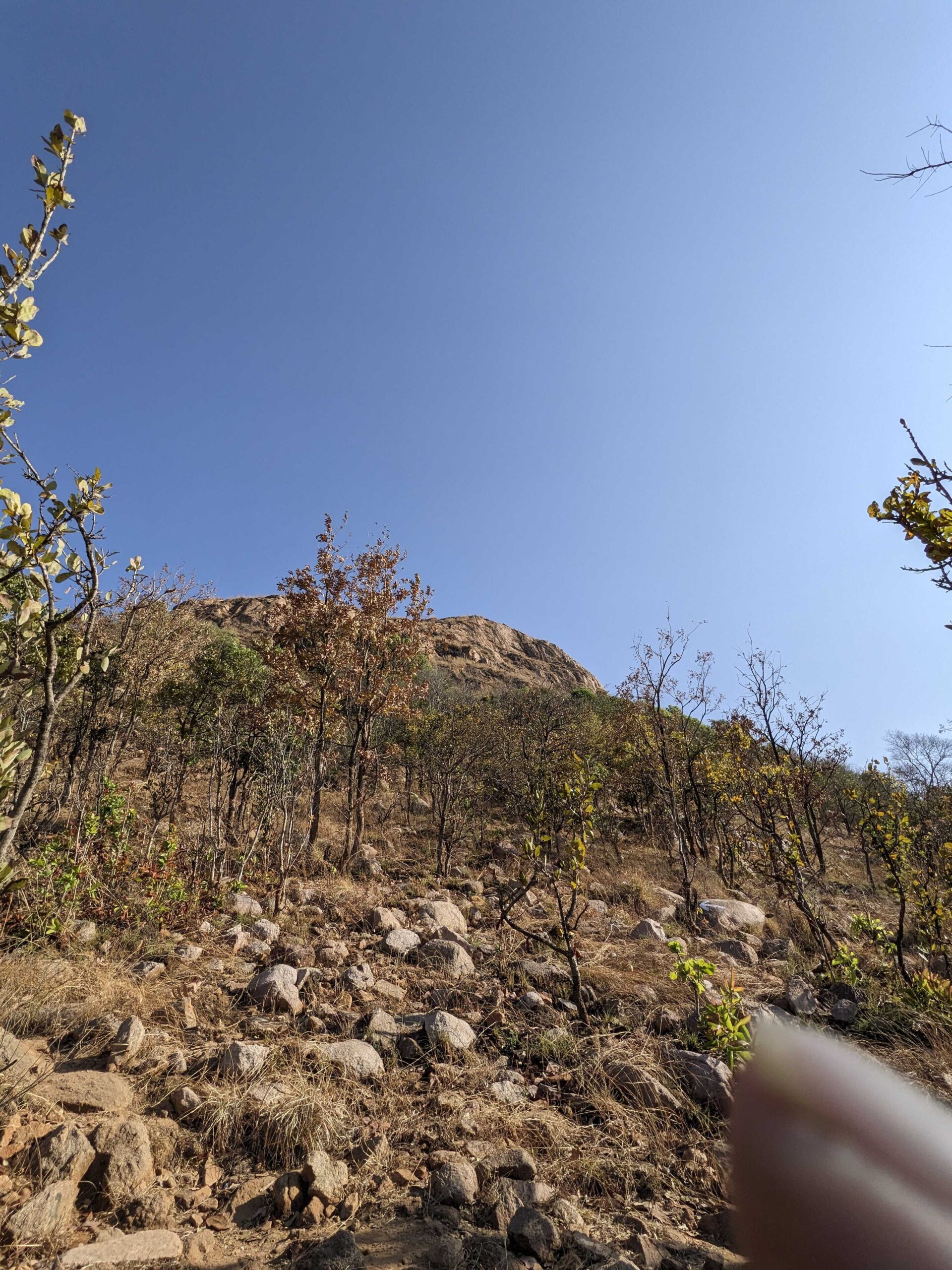
☀️ The Heat, the Scramble, and the Gentle Decision to Stop
All the while, the heat climbed like it had its own ambitions.
The path turned into bare rock scramble—hands-and-feet work, the kind that demands attention. And I realised: I could push through, but why?
So I decided to stop.
It was okay. Really.
Not a collapse. Not a defeat. A decision.
I shifted my goal from “reach the top” to “be fully here.” I admired trees and flowers, and watched for birds. And yes—did I tell you I had binoculars?
Apparently, binoculars are a social event. Passersby stopped to borrow them and gasp at tiny winged miracles.
Writing lesson #7: Finishing isn’t always reaching the peak. Sometimes it’s completing the experience you actually came for.
Down Again: Another Train and the Sweet Relief of Descent
Then down.
Another train.
Because the world likes to give you symmetry when you least expect it.
Coconut water appeared like a blessing—cold, sweet, immediate.
And then—a lovely surprise: meeting my old friend Anjana.
She said, “This was not an easy trek.”
I agreed, with the tender satisfaction of someone whose lungs have filed a formal complaint.
Writing lesson #8: Naming difficulty is not negativity. It’s honesty. And honesty is what makes writing land.
The Real Photo, the Real Day, and the Real Point About AI
Now let’s talk about the part that matters to me as a writer, and maybe to you too—especially if you’re trying to finish something and you’re flirting with the idea of letting technology do the heavy lifting.
I’m not anti-tech. I’m fascinated by it. I use AI writing tools and I enjoy the cleverness of it. But here’s what Makalidurga reminded me:
Do the hard yards first.
Walk the mountain.
Build the friendships.
Take the real picture.
Then—then—use technology to shape, organise, polish, and share what you earned.
Because AI can help you write a post.
But it cannot give you the thorny-bush shade.
It cannot give you the breathlessness that makes you humble.
It cannot give you the scent of that flowering jalagiri.
It cannot give you the stranger who borrows your binoculars and lights up like a child.
It cannot give you the train slipping past in the morning dark and making you feel, briefly, like life is a poem.
Writing lesson #9: Tools can refine your work. Only living can supply it.
Finishing vs Failing (and the Secret Third Option)
So what did this hike teach me about writing, finishing, and failing?
-
Finishing sometimes means reaching the summit.
-
Failing sometimes means stopping before the end.
-
But there’s a third option most of us forget:
Choosing.
Choosing to stop without shame.
Choosing to savour without rushing.
Choosing to measure success by presence, not performance.
And oddly enough, that choice makes it more likely you’ll finish the next thing—because you didn’t turn this attempt into a story of personal inadequacy.
You turned it into a story of awareness.
Which is what good writing is, anyway.
Be the first to read my new book on the Portuguese Camino!
Join the launch team of the upcoming book. I would love to share the early drafts, bonuses and general experience of writing the book about our camino. For an author the journey is not over until the book is written.