
The End of an Era: What the Gantzers Taught Us About Seeing India
For those of us who grew up reading the Sunday supplements, the names Hugh and Colleen Gantzer weren’t just bylines; they were an invitation to see the world. Like many of you, I started reading their articles in newspapers and magazines long ago, and their stories did more than just document places—they fired up a lifelong love for travel writing. And it showed us how it could be done as insiders, not as curiosity seekers.
As a military brat and wife, travel was already in my blood. I recognized a familiar discipline and curiosity in Hugh, a Commander in the Indian Navy who spent 21 years in the service before becoming a full-time chronicler of India. There is a specific way military life prepares you for the road—an ability to “arrive lightly,” as one tribute noted—and the Gantzers exemplified this. They began their professional travels in the 1970s on a Vespa scooter, journeys that took them from Cochin to Kanyakumari with their young son riding pillion.
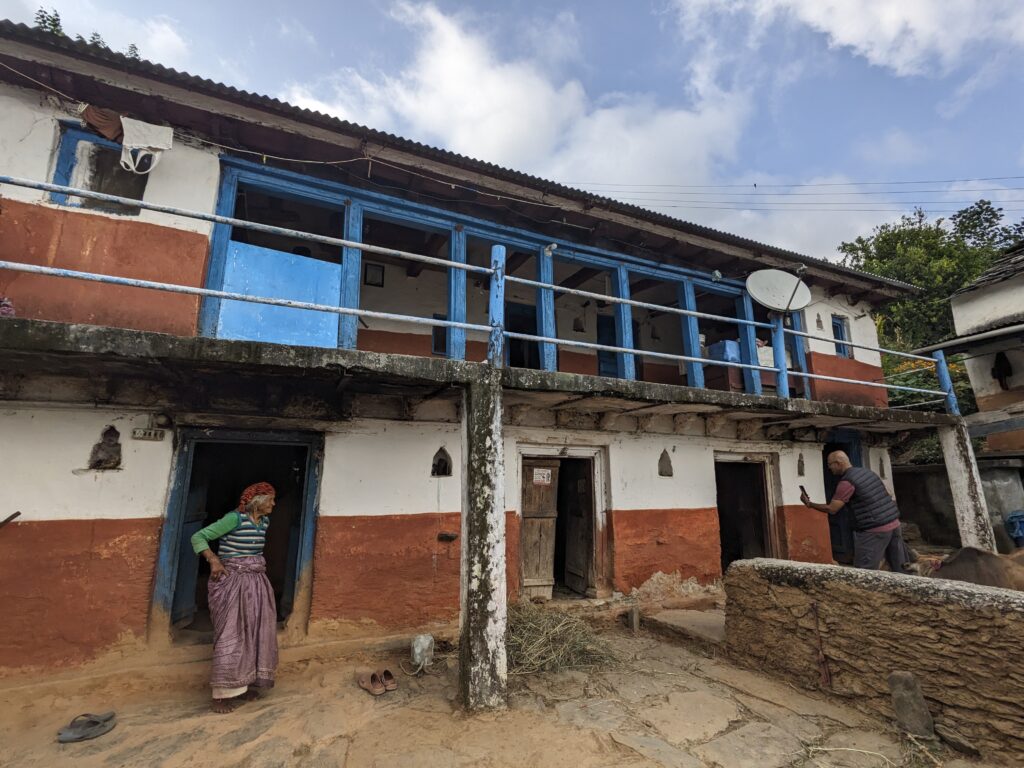
I had spent much of my military brat childhood watching India slide past moving train windows, and later, when my parents got the driving bug, driving from Kashmir to Kanyakumari in a battered old Morris Minor. In many places, villagers just stared at us in the usual way of seeing strangers in rural India, but in one place in the middle of a forest in Madya Pradesh, a woman jumped out of a bullock art and instructed the driver to pull over and help the “Anglo-Indian” sahib-log change the flat tyre. She told us that her land had been gifted to her by Anglo-indian sahib-log who left for Blighty. We assured her that we were still here, and weren’t going anywhere.
Visibility for a Tiny Vanishing Community
Perhaps most importantly for me, the Gantzers provided a rare and powerful visibility for the Anglo-Indian community. In a multicultural mosaic where we are often tiny and ignored, seeing two Anglo-Indians become the “GOATs of travel writers” was exhilarating.
They were fiercely proud of their roots—Hugh had Danish origins and Colleen’s ancestors were from Scotland—yet they were adamant that an Anglo-Indian, by constitutional definition and culture, “can’t be anything else” but an Indian. They didn’t just write about travel; they challenged the stereotypes that have long plagued our community. In their novel The Year Before Sunset, they explored the anxieties of the community during the transition to independence, offering “countertypes” to the negative caricatures often found in literature. Think Kipling’s caricatures in Kim, and the slanderous depictions of so many colonial writers of “half-castes”.

Writing as Inquiry, Not Consumption
For a writer, the Gantzers’ legacy is a masterclass in ethical storytelling. Long before the age of social media “travel gurus,” they were traveling “real and raw,” once even spending a night alone on an uninhabited island in the Andamans. They didn’t view travel as a commodity to be consumed but as an inquiry into history, geography, and people. It was to be tasted, smelt and felt, from the tops of misty mountains, to the velvety sand between your toes at Kanyakumari were three oceans swirled together.
They were the first to:
- Start a regular travel column in a national daily.
- Host a prime-time travel show on Indian television (Looking Beyond).
- Document every state and Union Territory in India.
Their writing room in Mussoorie was described as a “writer’s paradise,” stacked with books and papers, where they worked together for over 50 years. They proved that travel writing could be critical without being cynical and affectionate without slipping into “postcard fantasy”.
A Final Journey
With Colleen’s passing in 2024 and Hugh’s in 2026, we have lost the “First Couple of Travel”. Their joint Padma Shri in 2025 was a fitting tribute to a partnership that set the gold standard for Indian journalism.
For those of us left behind with our notebooks and our wanderlust, their lives serve as a reminder that travel is about an openness of mindset. They showed us that there was enough in India to last for several travel lifetimes. And you could writer about it and travel with a view to creating magic for readers as yet unknown. Write so that readers can see, hear, smell and taste the place!
Like me. Their writing changed and inspired me and my travel books and adventures. My greatest joy is when readers say that they experienced the place through my writing.
Be the first to read my new book on the Portuguese Camino!
Join the launch team of the upcoming book. I would love to share the early drafts, bonuses and general experience of writing the book about our camino. For an author the journey is not over until the book is written.