
I spend a lot of time helping writers figure out whose story they’re actually telling. Whose voices are central to the story. Which characters are mere background noise. Did you kill your darling? So this Anzac Day, I think about the editorial choices we’ve made with our own national story.
We know the beats. The landing at Anzac Cove. Simpson and his donkey. Quinn’s Post held by exhausted men for months. These are the scenes we return to, the moments we’ve polished through repetition.
Is there someone we forgot?
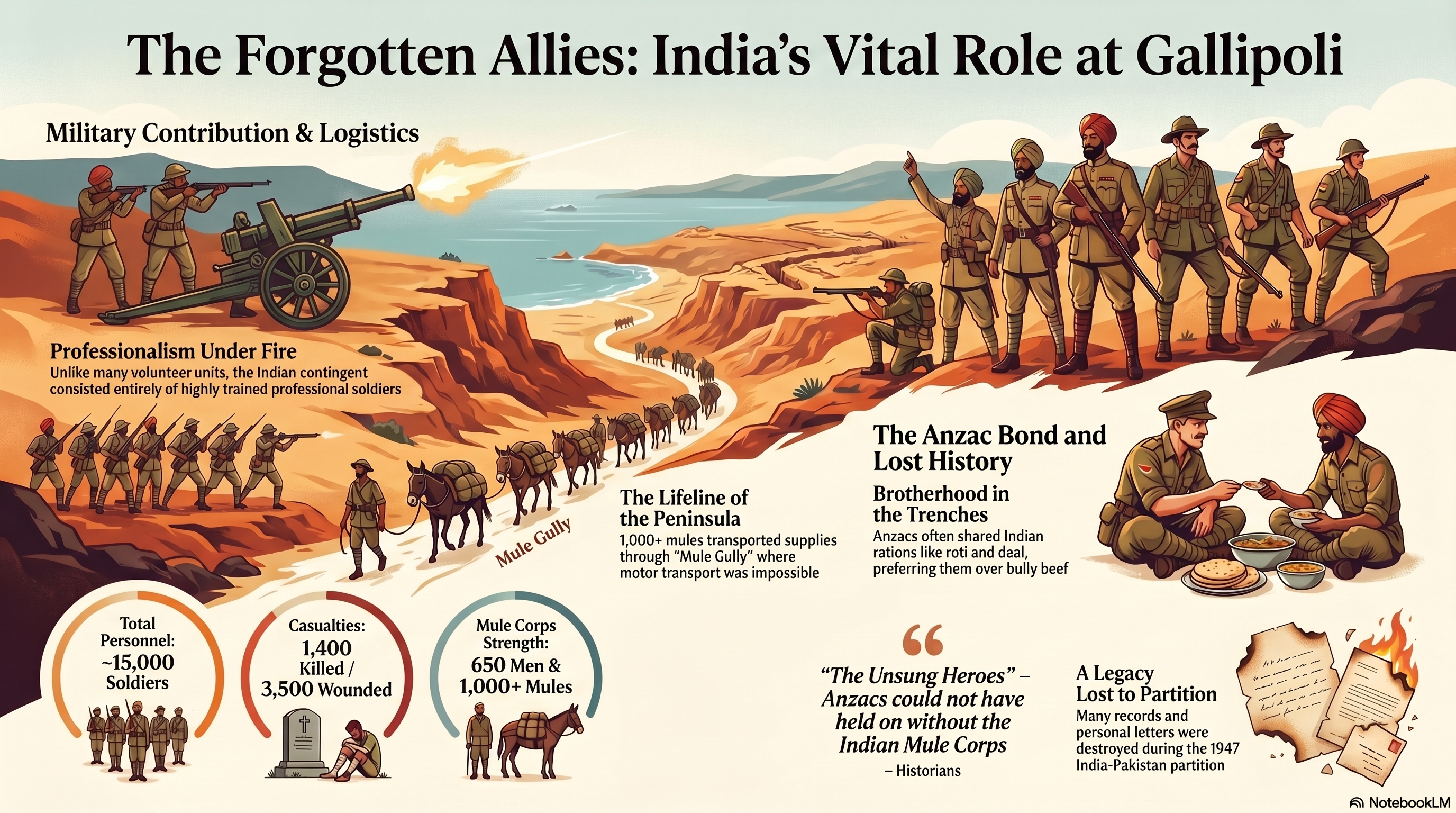
But more than 15,000 Indian soldiers fought at Gallipoli. Sikhs, Gurkhas, Muslims, Punjabi mule drivers. One in ten died there. The 14th Sikhs were essentially destroyed in a single day during the Third Battle of Krithia—an 80% casualty rate charging into machine-gun fire. They were cremated according to their religious rites, and then mostly written out of the version we tell each other. At this time, Australia is seeing a strident campaign against immigrants – it’s important to remember who belongs. It hurts my heart.
When You Cut Characters, You Change the Story
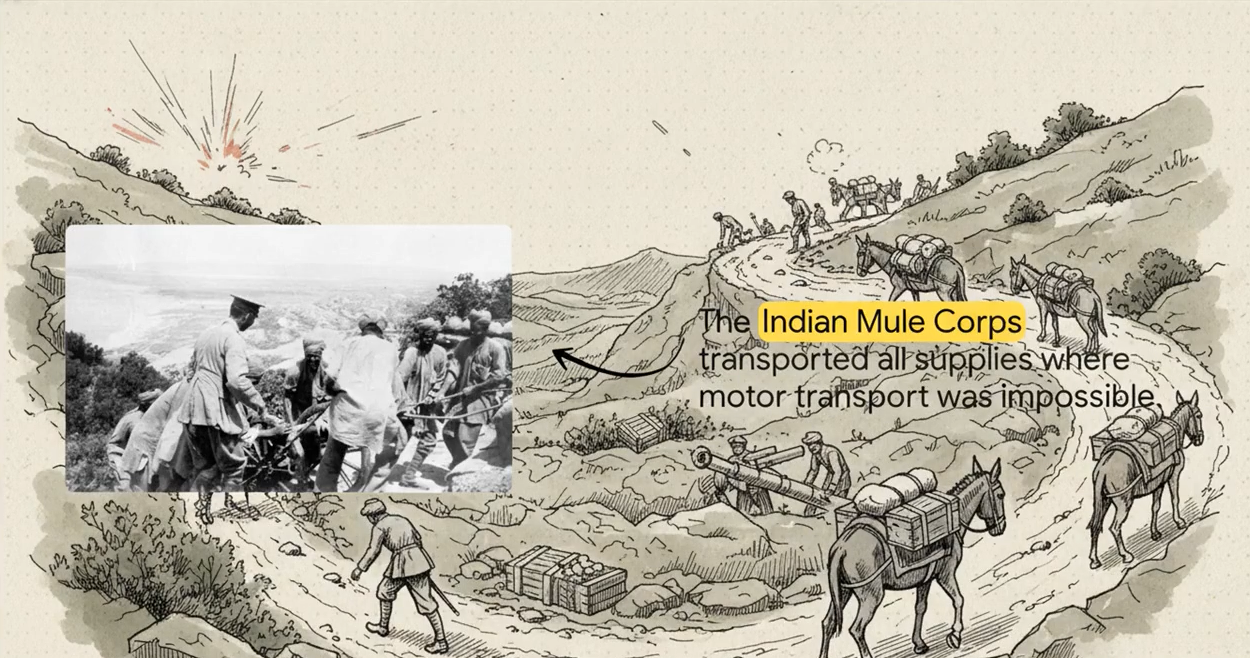
This isn’t about adding a diversity sidebar to an otherwise complete narrative. Historians will tell you Quinn’s Post probably doesn’t hold without the Indian mountain artillery. The 29th Indian Infantry Brigade wasn’t flavour text. They were load-bearing.
And the relationships weren’t distant or formal. Anzac diaries and letters constantly mention “my Indian friend” or “my Gurkha friend.” This was during White Australia—the official policy was racial exclusion—but the battlefield accounts describe real friendship.
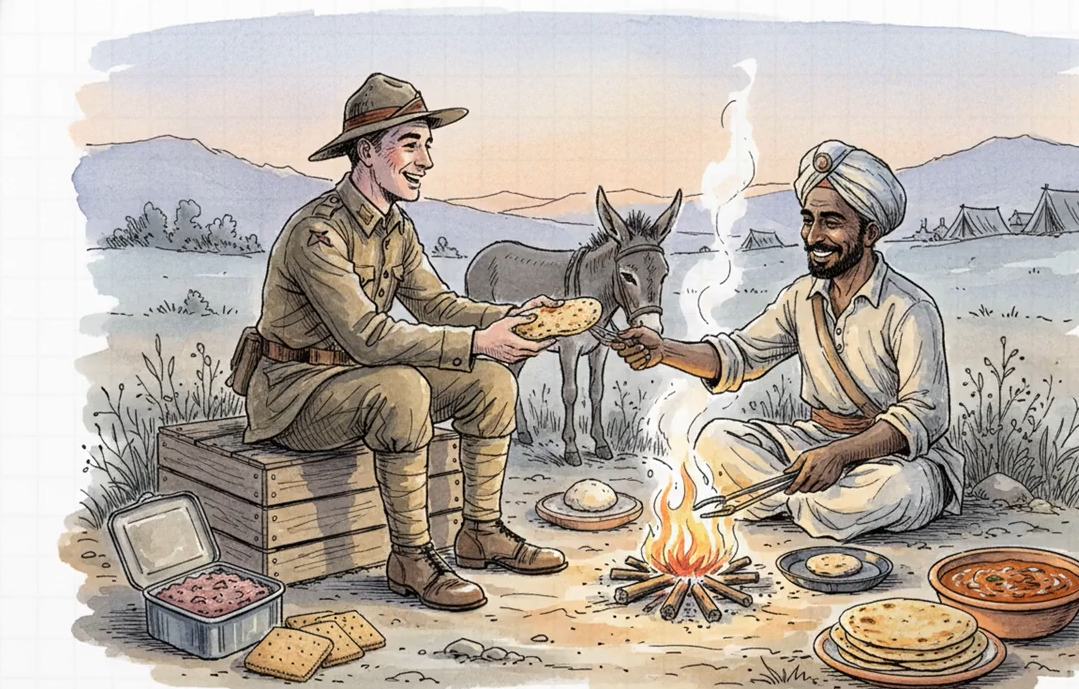
John Simpson Kirkpatrick, the man with the donkey we’ve turned into legend, spent his final weeks choosing to eat chapattis and curry with Indian mule drivers instead of bully beef. There’s a 1916 photograph titled “Best Chums”—an Australian soldier and a Sikh mate, both looking genuinely glad to be standing together.
These aren’t minor characters. They’re co-protagonists we somehow demoted to extras.
The Detail Nobody Remembered to Use
Here’s a piece I only learned recently: In August 1914, before Gallipoli even started, an Indian captain named Jaswant Singh was in Melbourne buying horses for the war. He saw an ad asking for church donations and immediately wrote a £600 cheque to pay for a stained-glass window.
The window is still there. Basilica of Our Lady of Victories, Burke Road, Camberwell. It depicts the Battle of Lepanto, but the real story is an Indian prince quietly funding a Melbourne church 110 years ago.
That’s the kind of detail a good writer would kill for. Connection, generosity, specificity. And somehow it got filed under “miscellaneous” in our collective memory.
Reclaiming Versus Inventing
When I see the Brisbane contingent of retired servicemen marching to honour the fallen of Gallipoli, or descendants of soldiers like Nanak Singh marching in Perth, or the Sikh Anzac War Memorial being unveiled in Sydney, I don’t see people inserting themselves into someone else’s story. I see the story being enriched and saying “actually, we were always in this chapter.”
Sixteen thousand Indians and Australians stood together on those ridges. That’s not background. That’s plot.
If you were workshopping this story with me, I’d ask: who are you centering? Whose voice is missing? What happens to the narrative when you restore the characters you cut?
This Anzac Day, maybe we try telling it with everyone who was actually there.
Be the first to read my new book on the Portuguese Camino!
Join the launch team of the upcoming book. I would love to share the early drafts, bonuses and general experience of writing the book about our camino. For an author the journey is not over until the book is written.